How I helped a health-tech B2B SaaS team cut Time to First Value from ~18 weeks to <90 minutes… without ever touching the product
A case study on helping a healthcare B2B SaaS team streamline onboarding and reduce time-to-first-value from 18 weeks on average to... 90 minutes — without a single dev ticket.
Disclaimer
This is a ~12min read case study, so here are 5 reasons why reading it could be valuable for you:
- you're a B2B SaaS founder/CEO looking to improve activation / retention
- you can't make any changes on your product right now
- you're curious about the thinking behind activation strategy
- you're interested in how to improve onboarding without touching your product
- you'd like to see what working with me looks like
• even if you can't make any changes in your product, you still can do a lot to improve onboarding and reduce time-to-first-value
• the constraint forces you to fix the right things first
• strategy work happens outside the product: ICP, first moment of value, journey mapping, nudge sequence design
• a well-run sprint can reduce time-to-value without a single dev ticket
• the product becomes easier to fix once you know what it needs to do
Last year (2025), I received a DM from Mark, a freshly-hired head of Customer Success who was actively looking to fix activation.
The company was an Australian healthcare B2B SaaS (Mark had reached out after seeing some of my posts on LinkedIn) and they needed to get rid of a 11% early churn rate that cost them lots of missed revenue.
Why now? (I mean, why then?)
Because the team had just became PE-backed and they needed to improve on critical metrics, including activation and retention.
Their product was the best on their market so its value wasn't the problem. The problem was getting to experience its value took in average 12-24 weeks (WEEKS!!!).
Why so long?
Well the product was complex. Lots of features and use cases for multiple user segments. It was basically an all-in-one solution for companies. And because the product was so bloated (sorry not a nice adjective) — and also because doing an entire re-design would have taken super long — the CS team was onboarding clients manually and... also asking them to go through a very dense and tedious training phase that consisted in multiple videos that often were one hour long videos (😱).
Now do you imagine how hard it must have felt for new customers to learn the product and get to experience its value for the first time?
Making fixing activation a high priority made total sense here...
So we worked together through a 3-week sprint.
I'm going to walk you through the process we followed, but here are the main outcomes:
• alignment on ICP and first value moment
• complete user journey mapping from signup to first value moment
• heavy learning doc turned into a progressive micro-learning strategy
• behavior-based nudge sequence MVP design
• streamlined internal processes to speed up onboarding calls
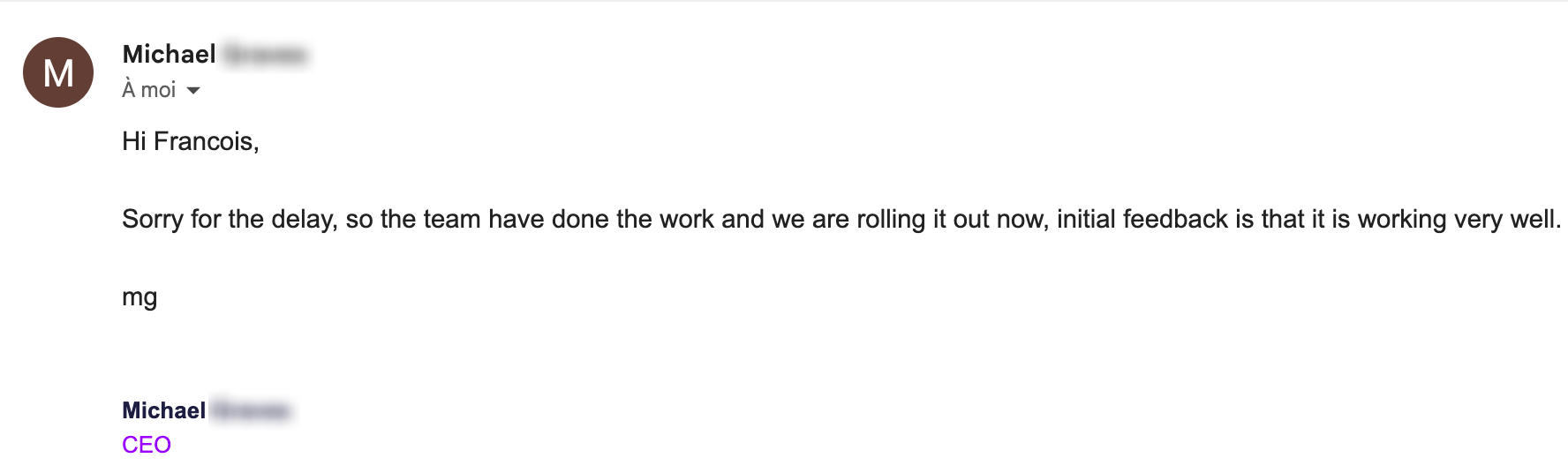
Initial results:
When you have a very complex product with many features, many use cases and many user segments with different goals, and you CAN’T make any changes in that product… what do you do?
This is how my conversation with the team started.
They wanted to make onboarding more effective without redoing the whole product, so they could improve retention to unlock expansion/growth.
I wanted to fix onboarding so it was more efficient without having to rebuild everything, get people to TTV [time to value] after and ultimately having activated them, retain them over the longer term, demonstrate ongoing value to then upgrade and grow the accounts.
— Mark, Head of Customer Success
Here’s how Mark described their situation:
When I had started I learnt that the onboarding process was extremely drawn out and took weeks to months. I also learnt that everyone was teaching customers every single feature and observed some onboarding sessions myself where it was very clear customers were tuning out. In addition, churn within 6 months of customers starting their subscription was increasing.
Mark seemed to really care about fixing the situation and he was well aware of the importance of onboarding and activation:
Activation is critical and a lot of companies, even product leaders don't understand the importance of it. I've spent my entire career in the space of onboarding new customers and it just further highlights to me how critical it is to get right.
But despite the strong will Mark, the CEO and the team had to improve onboarding and get rid of that early churn spike, they also had very scarce resources and tech debt made it almost impossible to make any changes in the product… for now.
So here’s what we did instead:
Workshop 1: ICP and First Meaningful Win.
Who is the user who benefits most from the product? What does their situation look like before, and after? And — critically — what's the first moment they experience real value? Not "setup complete." but the moment they think: "this is what I came for".
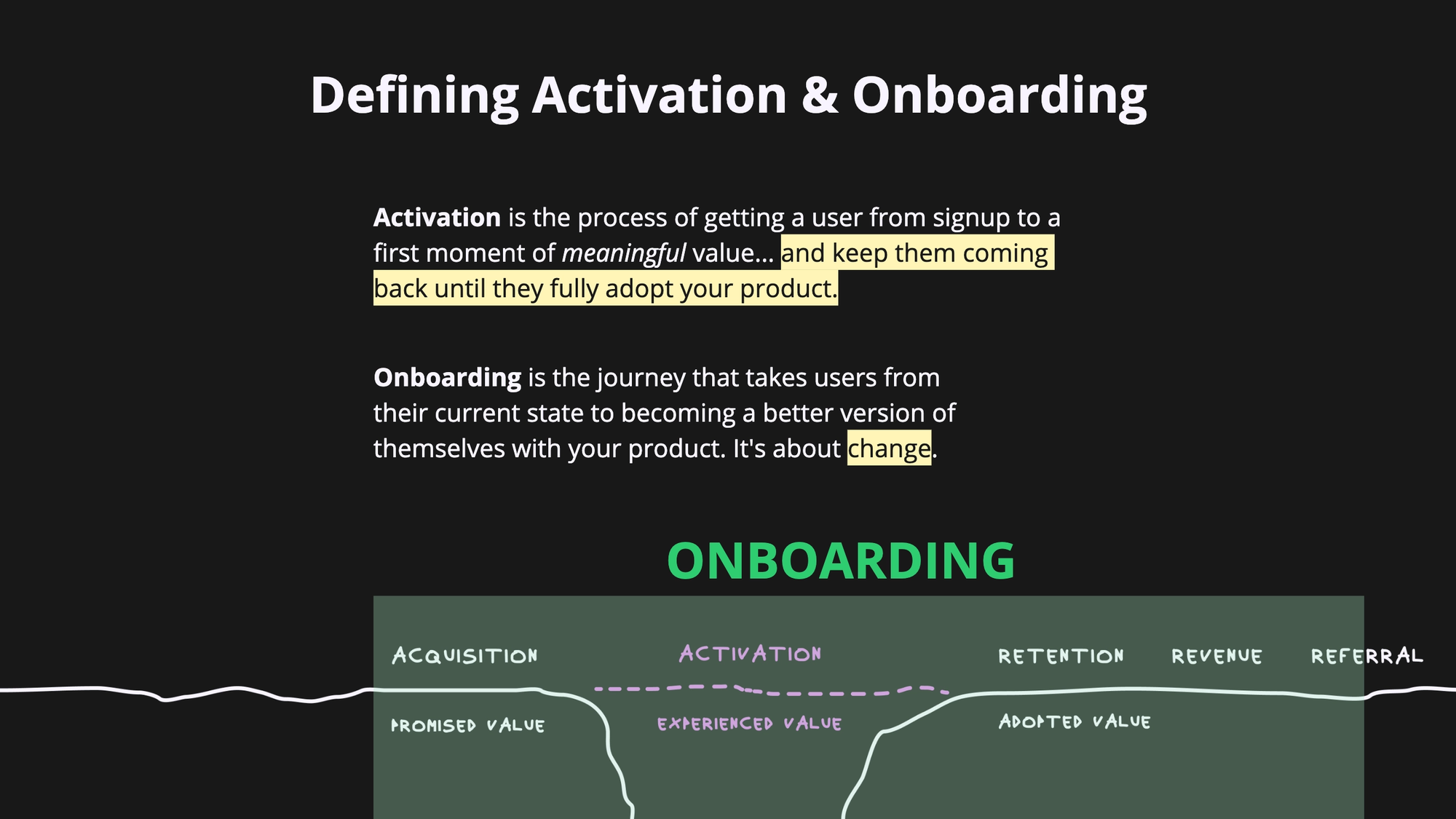
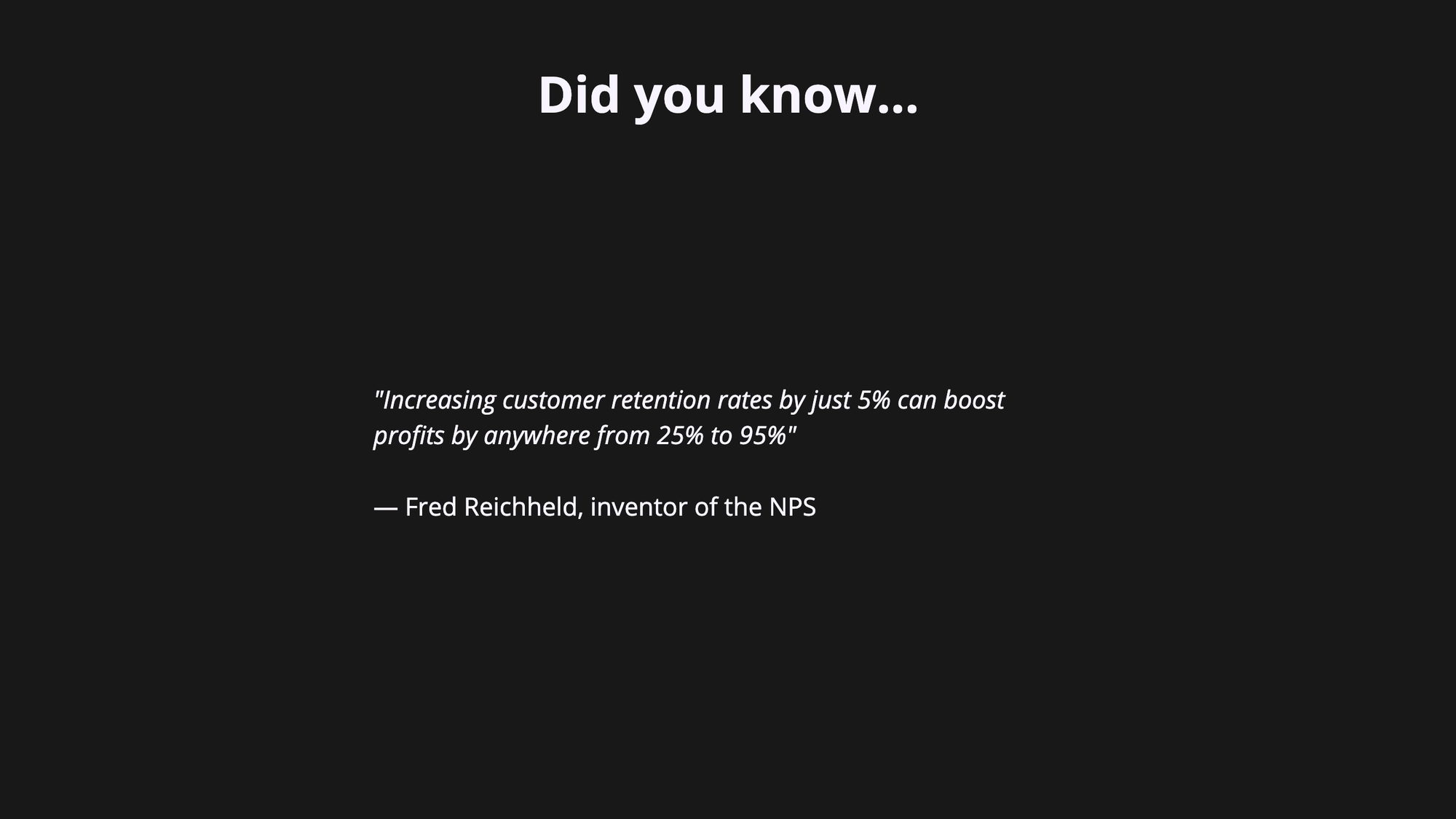
I first clarified the definitions of activation and onboarding, busting a huge myth about onboarding:
- no, onboarding does NOT start at signup
- and no, it does NOT end after reaching a “aha!” moment or upgrading to paid
Then we brainstormed and aligned on:
- the main user segments their product serves most
- their current situation and what success looks like for them
- the user journey to reaching ultimate success and their First Meaningful Win
We help [target user] achieve [action] so they can [benefit] without [pain].
Once you know your First Meaningful Win, the whole onboarding question changes. It's no longer "how do we explain all the features?" It's "how do we get them to that moment, by the shortest path possible, with as few obstacles as we can remove?"
Real wins are user-centered. Does yours match these criteria?
1. it’s tied to their own goal
2. it delivers a felt sense of meaningful progress
3. does it make users think: “Wow, this is working. That's why I came for."
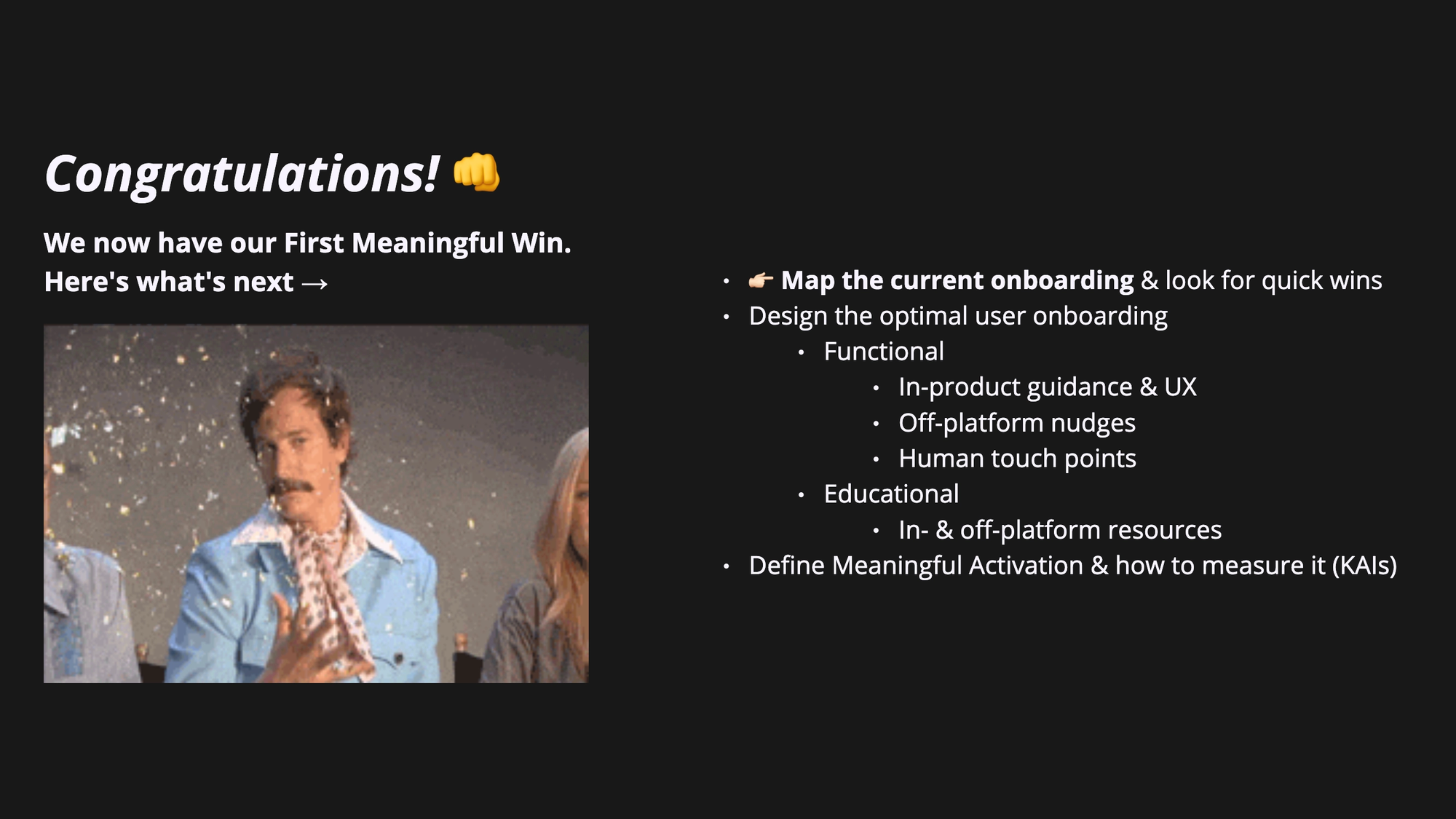
The part I liked most was workshopping our First Meaningful Win.
— Angie, Product Designer
Workshop 2: Journey mapping.
We mapped every step between signup and that first meaningful win. Not the ideal journey, but the actual one, including what could could go wrong for each step, where users could get stuck or momentum could die.
What this surfaces, almost always: steps that are in there for the wrong reasons. Steps that made sense to the team but don't make sense to a new user. Steps that could be delayed, simplified or even removed entirely.
Talking to users to get valuable insights and validate assumptions as we progress
In parallel to our workshop I recommended the team gets feedback from their users:
- currently happy, retained users → what’s the first moment they realized the value of the product
- recently churned users → what were they hoping to achieve with the product, and what made them churn
- users currently in onboarding → where they’re struggling and what’s missing
It’s easier to run surveys to get many responses, but I recommend also running few 1:1 interviews if possible. ~5 convos with each of the groups described above is more than enough, and usually perfectly doable.
Their designer worked on an interview guide, and I gave feedback and guidance to improve its efficiency and reducing bias-inducing questions.
Once we had high confidence in what our first meaningful win was, we moved on to the next phase:
How to drive new users to their First Meaningful Win faster, even though the product is complex to learn and no changes can be made on the interface?
There are 4 core pillars for any onboarding to work:
- in-product experience → what users need to interact with to succeed
- off-platform nudges → what will get them back on track when they wander
- educational content → what they need to learn to succeed with the product
- human touch → the critical moments where talking to a human can’t be replaced
And the biggest problem (or biggest opportunity) for this team was their learning experience.
When we started working together, they had a separate platform they sent users to. And those humans were supposed to go through multiple, hour-long videos teaching everything the product does.
There were also many meetings with customer success people to help them configure their product and start getting meaningful value.
The entire onboarding process spanned over weeks... even months! And because processes were not optimized for efficiency, the team was constantly overworked.
So I guided them toward a much more user friendly and efficient learning experience.
A much more efficient and user friendly learning experience
Here’s the core principles the strategy we developed for their learning experience relies on:
- break long videos into snackable, short-form ones
- reveal each video only when it becomes relevant, based on user advancement
- ensure each video has a clear goal tied to user success
At this point, we had the step-by-step user journey from signup to first meaningful win, and the matching learning content pieces.
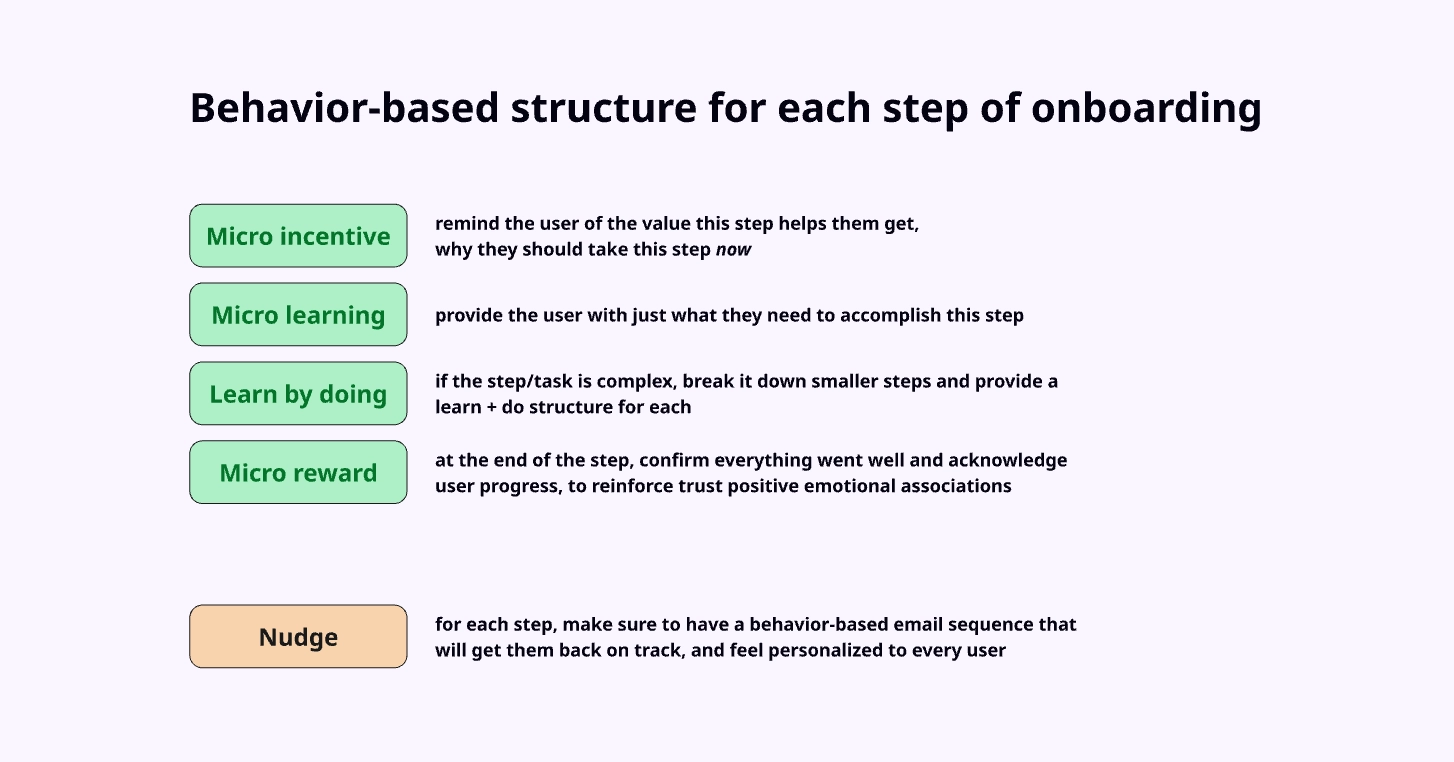
Next, we made sure to give each step a behavior-optimized structure to drive motivation and engagement.
How to use behavioral and emotional design to drive engagement and strengthen retention
To drive behavior and product adoption, we need to build the right things. That’s strategy.
We also need to build the right things, the right way. That’s user experience (UX) design.
And we need to make sure you deliver on your users’ functional needs.
All this is logical. But there’s more…
Our decisions and actions are only justified by our logic, our reasoning. What drives them in the first place is emotions. No wonder there’s “motion” in “emotion”.
So yes, we need to build for logic.
But we also need to build for psycho-logic.
That’s when user psychology becomes pretty handy.
Here are the 3 core psychological pillars of behavior-driven design:
- trust → this product and team genuinely want me to succeed, not scam me
- belief → this product is the best solution to achieve my goals
- confidence → this product is reliable and winning is easy!
And here’s how we structure each step of the onboarding:
Now that we had mapped the onboarding process, we needed 2 more things:
- a behavior-based email nudge sequence
- a list of meaningful activation metrics to measure impact
Designing a minimum viable behavior-based email nudge sequence to ensure users stay on track
As the team had very scarce resources, before building a comprehensive and fully automated email nudge sequence, we first needed to make a proof of concept (POC) and validate confidence before investing further.
So every email would be manually sent. But that doesn’t mean there shouldn’t be an optimized approach to this.
So what’s a behavior-driven nudge sequence?
Have you ever signed up to a product and received a sequence of emails in the following days, with emails prompting to take X action or use Y feature even though it didn’t make sense for you? Or maybe you still kept being reminded to do Z but you had already done it 3 days ago?
That’s a time-based email sequence (also named a drip sequence).
And it’s much less effective than a behavior-based one.
A behavior-based sequence is when every user receives emails that are 100% relevant to where they are in their journey. For example:
- next logical action for user to take is X
- user hasn’t gotten started doing X for 1 day → send first reminder
- hey user, here’s your next step to {reaching meaningful value}
- user still hasn’t engaged with X for 3 days → send second reminder
- hey user, here’s your next step to {reaching meaningful value}. In case you wonder how to use {feature}, here’s a quick how-to video
- user has started X but hasn’t completed the action
- hey user, you started X yesterday. You’re 3 minutes from finishing your first {meaningful goal}. Let’s do this now!
See how much more relevant and personalized this feels?
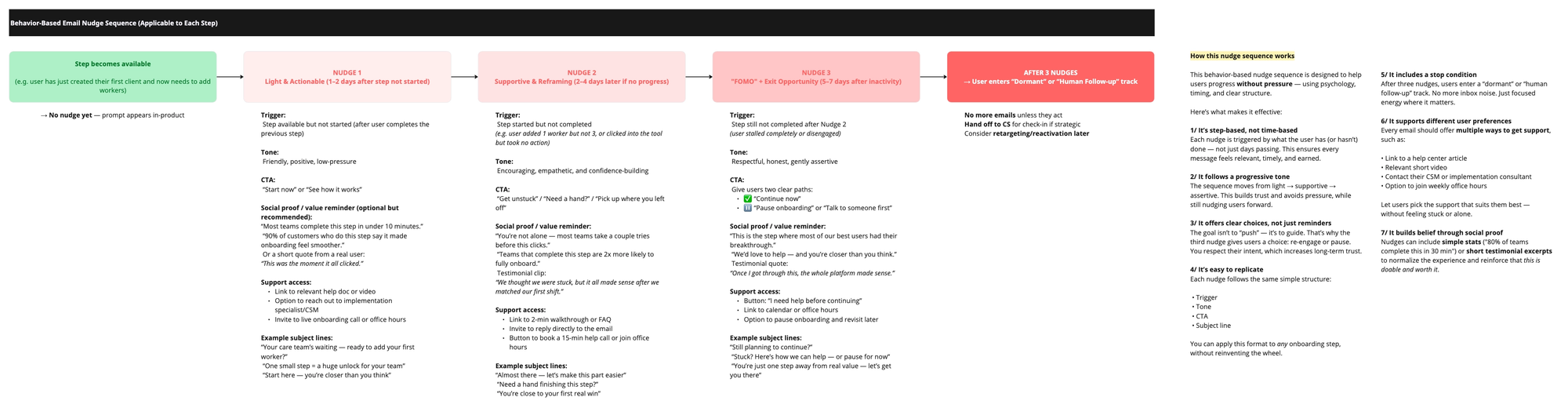
Here’s how the nudge sequence MVP looked like for each step of the onboarding journey:
- step becomes available
- nudge 1 → light & actionable (1–2 days after step not started)
- nudge 2 → supportive (2–4 days later if no progress)
- nudge 3 → "FOMO" + exit opportunity (5–7 days after inactivity)
- after 3 nudges → users enters “dormant” or “human follow up”
Defining meaningful activation metrics
Activation is not measured in time spent on app or number of clicks/page views, or even specific tasks done.
It’s measured in how often new users reach their First Meaningful Win, and the meaningful wins after.
And the goal is to find the number of repeat actions needed for a user to truly adopt our product.
For example, Slack at the time had found out that 91% of users who sent 2,000 message in their app became long-term users. That metric was their activation north star.
For Facebook, it was connecting to 10 friends in the first 14 days. This milestone was found (through regression analyses and qualitative research) to most strongly predict whether a user would be retained past 30 days.
For Canva, it’s exporting 3 designs within 2 weeks.
Of course, when you’re starting out with this, you don’t have much data to use. That’s why it’s important to focus on meaningful user bhaviors and to start looking for patterns of correlation between # meaningful behaviors completed and users successfully retained.
This is, like everything else, an ongoing, iterative process.
Wrapping up
After our 3-week sprint, the team had:
- a clear and actionable plan to streamline their onboarding for more efficiency and results
- frameworks, tools and a systematized way to design every step and content
- a method for shipping minimum viable experiments and measuring impact
Why this work mattered:
- early churn was 11% in first 3 months
- onboarding spanned weeks/months
- product was complex and couldn’t be changed due to tech debt
- they needed efficiency and results
- we delivered both, in just 3 weeks
And as a result, Time to Value fell from 12-24 weeks on average to… less than 2 hours.
I’m bad at maths, but I believe that’s 99,95% improvement.
Here's what the team said:
At first, I wasn’t sure what François’s role was or what value he’d bring. And I was worried about the rework and the time it might take to bring him up to speed.
But as a result of working with him, we gained clarity and direction, alignment and buy-in, structure and guidance. And I even understood my own knowledge gaps better.
The part I liked most was workshopping our First Meaningful Win. Three other benefits I experienced:
– Senior Product Designer support and guidance
– Trust from our leadership as a result of working with François
– Personal growth and learning around onboarding
Would I recommend him? Yes! He’s knowledgeable, great at workshop facilitation, friendly and has extremely valuable experience.
I really enjoyed working with him, and it was super valuable to the team. I love how he structures his approach and how he guides discussions. Very friendly and easy to work with.
— Angie, product designer
A slight concern we had about working with François was that we did have a significant time zone difference. But this turned out not to be an issue because he was extremely accessible — though for a more hands-on project, it might be helpful to be able to meet more frequently during the day.
As a result of working with François, our chaos turned into organised chaos — in a great way! We have very intelligent people all working towards the same common goal, but we lacked direction and guidance, and he provided exactly that. François turned our ideas and thoughts into actionable steps, and gave us simple frameworks for success. I found that we were able to work better and more collaboratively with his guidance.
I liked the first session the most, as it made us document and talk about our current process. That made it easier to identify our pain points and our meaningful wins. I also liked how easily accessible François was via Slack — as well as the reminders, thoughts, and messages he would send throughout the week. They were a great nudge to keep this project moving, even when other work got busy. His approach felt friendly, guided, respectful, and easy to work with.
Here are 3 other benefits we experienced working with François:
– Greater cross-functional collaboration — we had people from different departments working together thanks to his guidance
– I learnt even more about our product and our company’s value — especially in the first session, which really clarified what makes us successful and where to focus
– I enjoyed working on a project that others may have seen as boring or mundane
I absolutely would recommend working with François to anyone looking for onboarding or activation guidance. He’s a great asset to any company — and he made it easy for us to want to do the work. We made huge progress in such a short space of time.
— Rachel, customer success manager & implementation consultant
In conclusion
When a team tells me they can't touch the product right now, I actually see it as good news. It means we have to get the thinking right before we build anything. Which, honestly, is how I believe it should work anyway.
The product is the last thing you should change because it's the hardest to undo. The strategy, the journey map, the nudge sequence: you can run those as MVEs (minimum viable experiments) first. Test them manually, see what works and only then build what earned to be built and systematized.
If you're sitting on an onboarding problem and waiting for a dev window to fix it, you might not need the window yet.
You might just need to do the thinking first.
Hope this is valuable.
PS_
Senior Product Designer • Activation/Onboarding Specialist
Helping B2B SaaS founders activate, convert and retain more users
Let's talk → LinkedIn | fsimitchiev.com