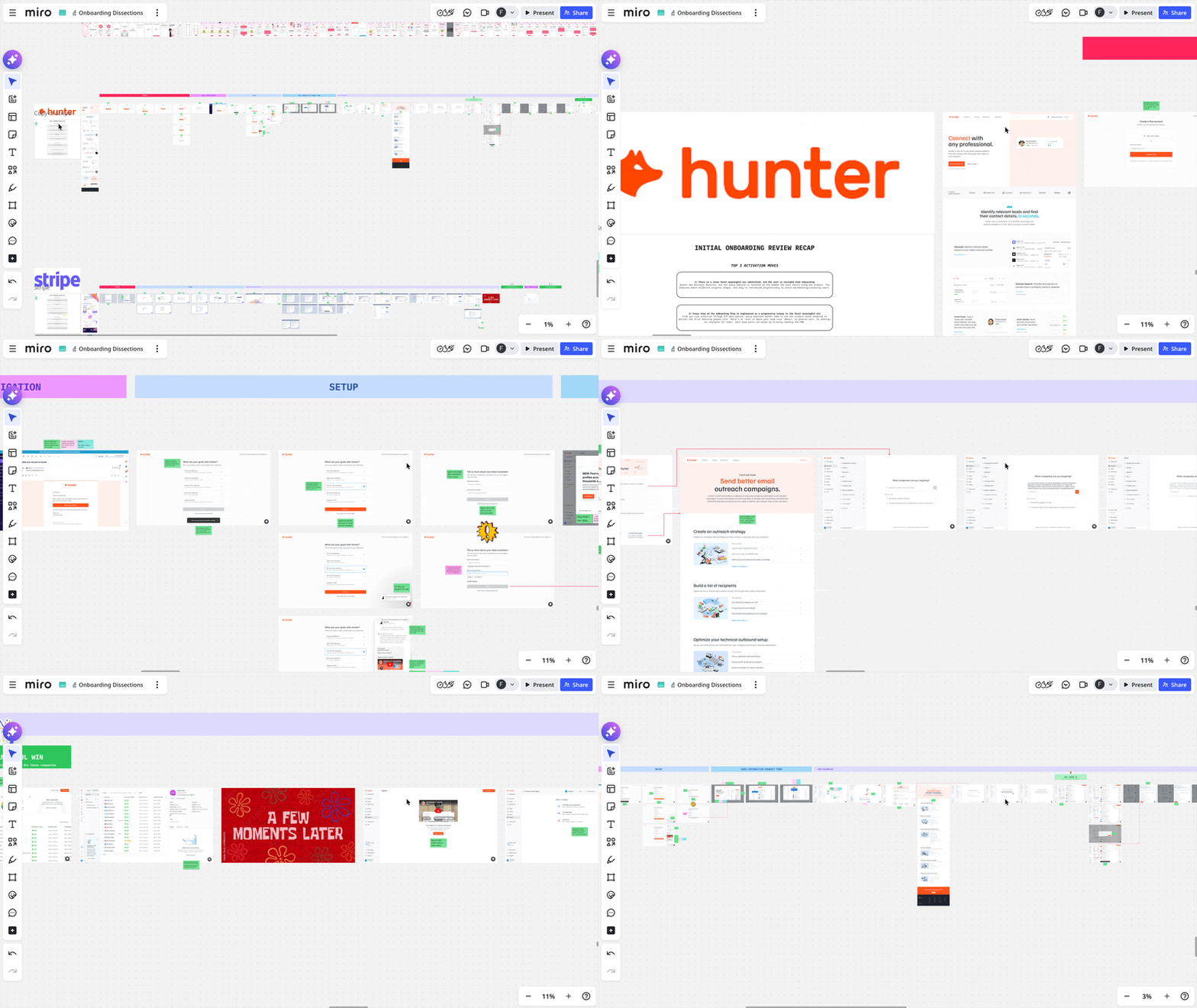
[🔬 onboarding dissection] Hunter top 3 activation moves

What is Hunter?
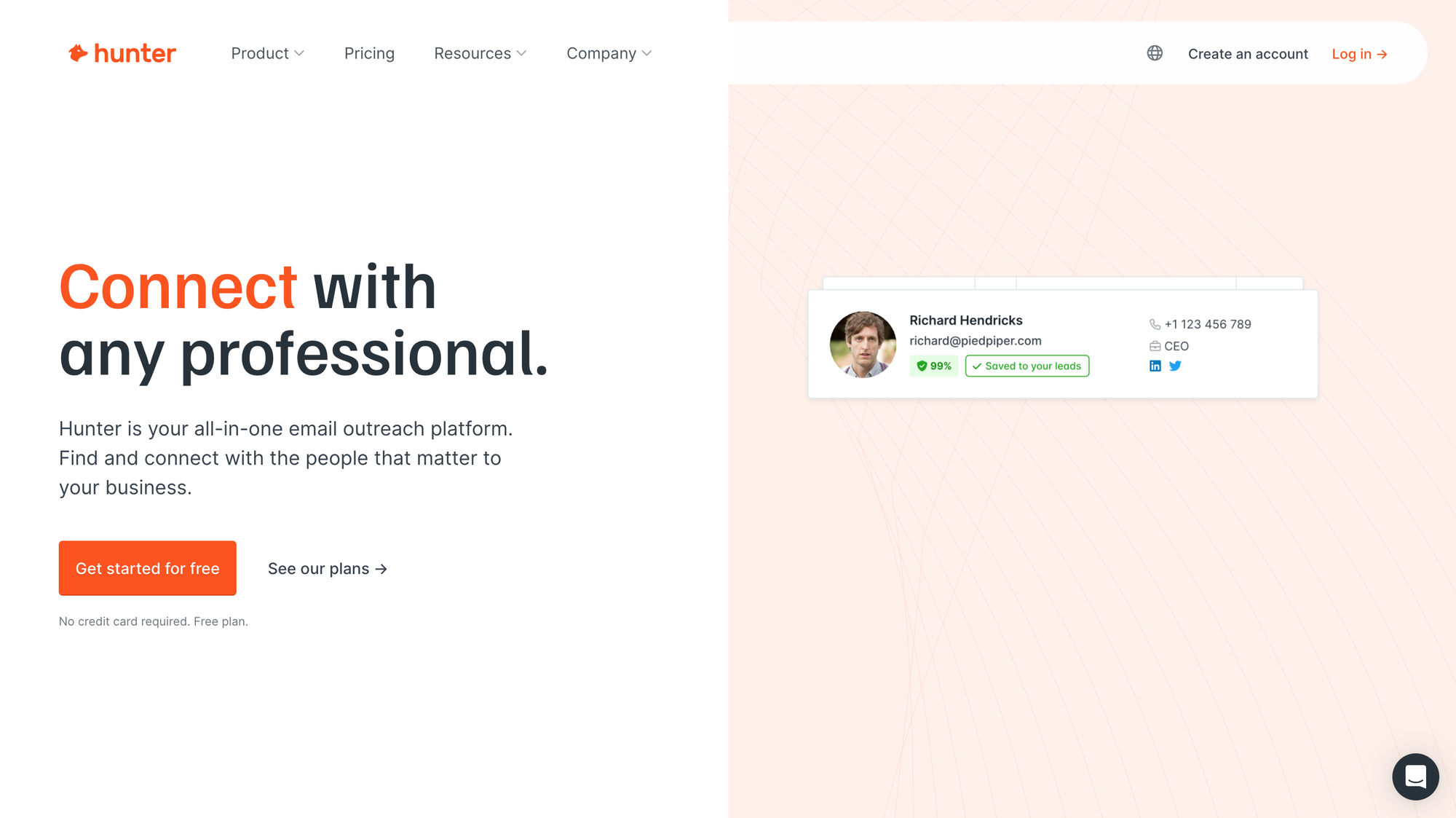
Hunter is a sales prospecting tool. You feed it an ICP, it gives you back a list of companies and people that match, plus the contact info to reach out.
I have reviewed a lot of B2B SaaS tools, and Hunter's onboarding is one of those that I think every B2B SaaS founder should look at, regardless of their category.
Here's what strikes me the most about it:
Hunter's onboarding is shaped end to end around one thing: getting the user to a clear first meaningful win: their first list of matching people. Everything else is cut.
Here are the 3 activation moves Hunter gets right + one bonus I think you should steal.
TOP 1 — A clear first meaningful win, and everything done to make it impossible to miss
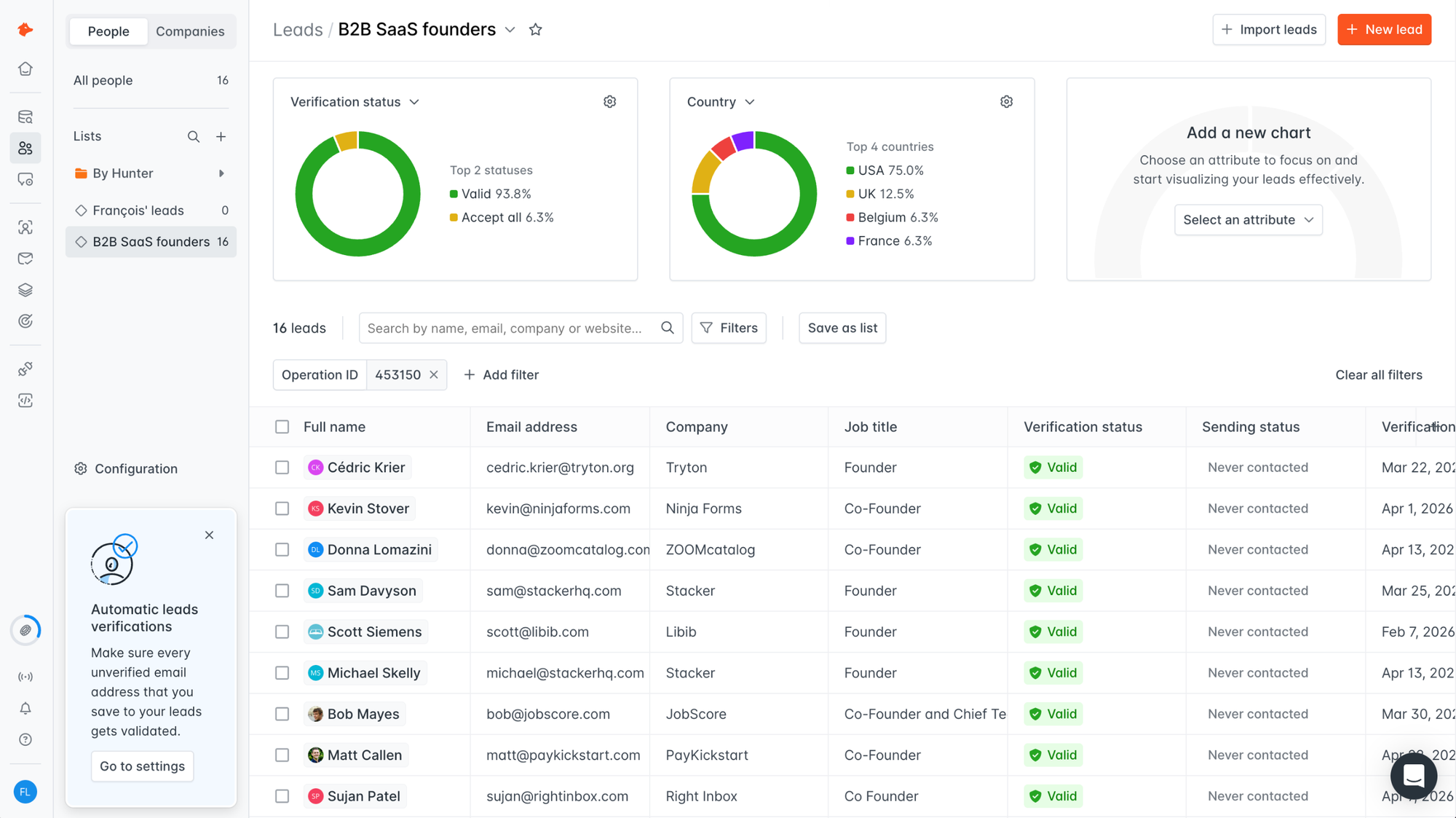
Hunter has a lot of features. But not every feature is relevant the moment a user starts using the product. Discovery, Signals, Campaigns, Email Finder, integrations... all of it has its place, but not at the same moment.
In Hunter's (and many many other products') case, feature relevance is a function of progress stage. What matters at minute one is not what matters in week 2. And the onboarding (welcome email included) is built around the minute-one goal: get the user to a first list of matching people for their ICP. Everything else is deferred until it makes sense for the user to care.
This is the discipline many onboarding flows I review miss, probably out of a potential fear of not showing enough to wow users. Feature count gets confused for feature value, and users end up touring a product instead of using one, or simply not knowing where even to start.
The trap isn't showing too many features. It's showing the wrong ones at the wrong time.
TOP 2 — Every step of the onboarding flow is engineered as a progressive runway to the first meaningful win
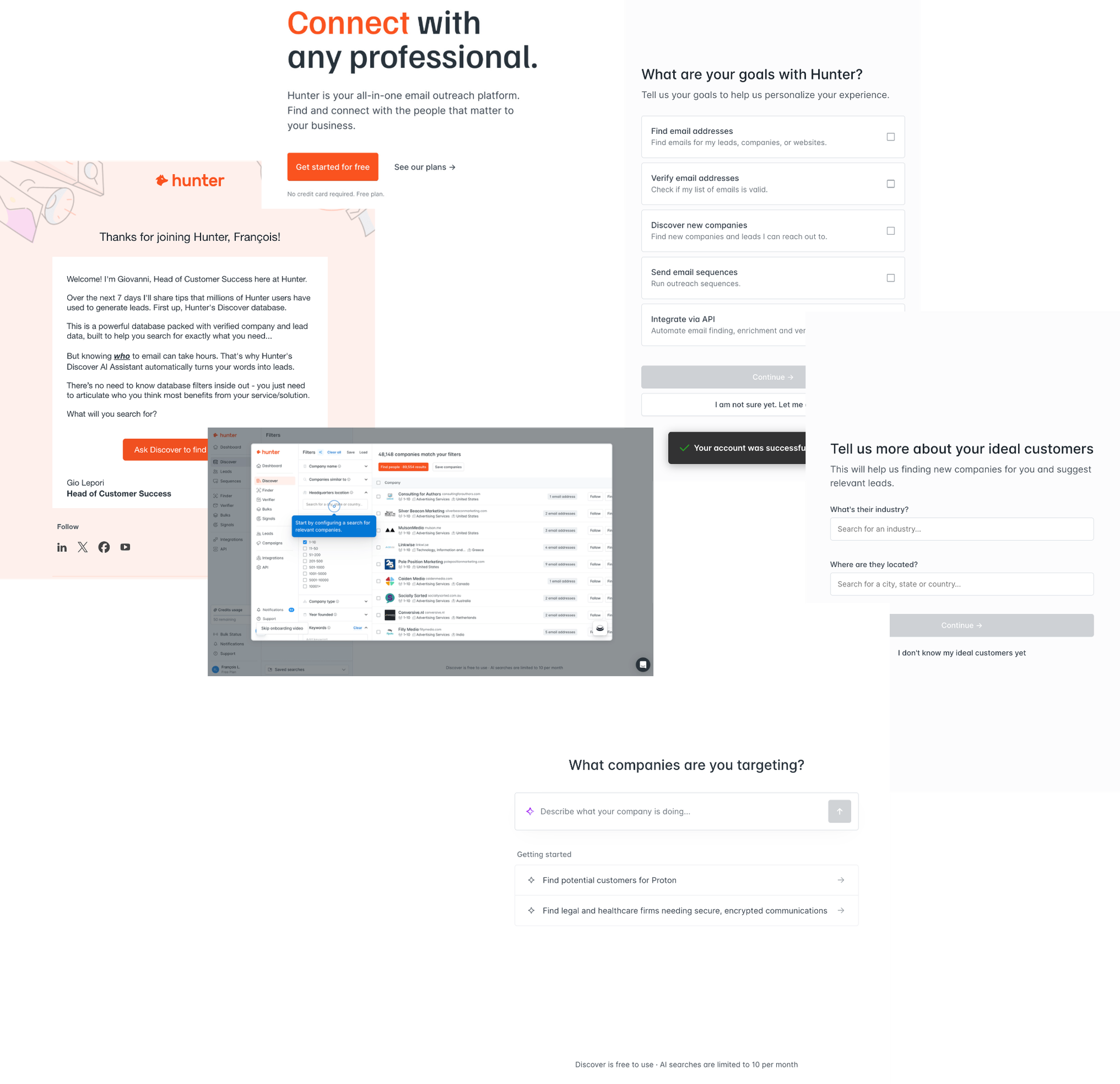
From use case selection through ICP description, every question Hunter asks is one the product genuinely needs answered to deliver that first matching-people list.
There's no "tell us about your team size" detour. No feature tour. No settings to configure for later. No "pick your favorite color" personalization or whatever non-mission-critical stuff. Each step earns its place by directly enabling the first meaningful win, and explicitly explains why it will benefit the user.
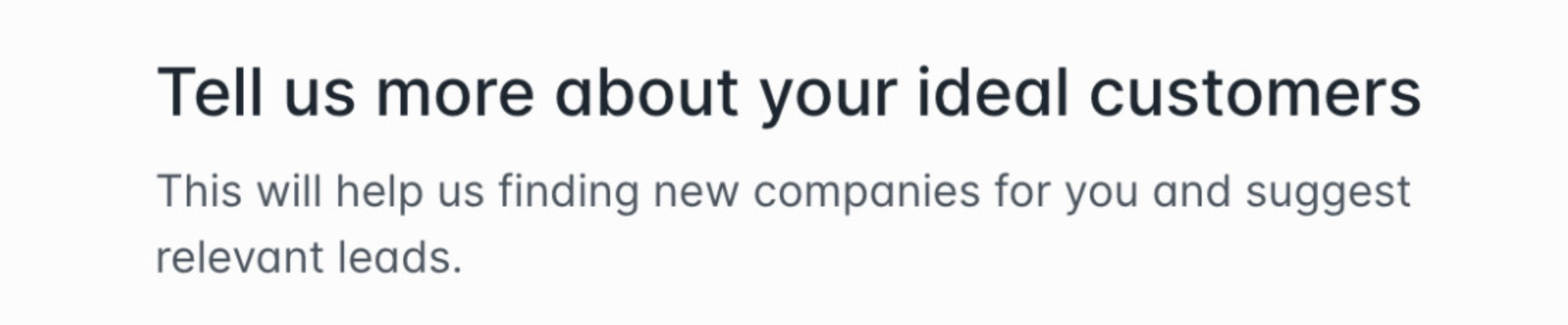
The best example is the ICP step. The obvious build would have been a filter panel. Job title, seniority, company size, industry, etc. If you have ever spent an afternoon setting up a LinkedIn Sales Navigator search, you most likely know the feeling: a gas factory of dropdowns, checkboxes and exclusion rules that make you want to close the tab and go take a walk.
Hunter offers an AI text box instead. You describe your ICP in plain English ("marketing leaders at B2B SaaS companies in Europe with 50-200 employees") and the product figures out the filters for you.
That choice isn't a bland/useless AI thing just to follow the trend. It's a refusal to let onboarding feel like the dread it's supposed to replace. The biggest competitor of any new tool is not another tool, but the friction users already associate with that category. Hunter knows this and designs against it.
TOP 3 — Stacked micro-aha! moments leading to a series of meaningful wins
The first meaningful win isn't one moment. It's a ladder of small wins, each one earning the next click.
Matching companies → matching people → Signal results.
The user sees a list of companies that match their ICP. "Oh nice, this works." That builds enough trust to want the people list. They get the people list. "Oh wow, this really works." That builds enough curiosity to try a Signal. The Signal fires its first result. "Wait, this is actually useful."
By the time the user finishes their first session, they've had 3 reasons to believe the product works. And feature discovery happened inside the ladder, in a chronological sequence that makes sense to the user. New capabilities are introduced when the user has made the right progress to want them, which is when they're most likely to be learned, used and stick.
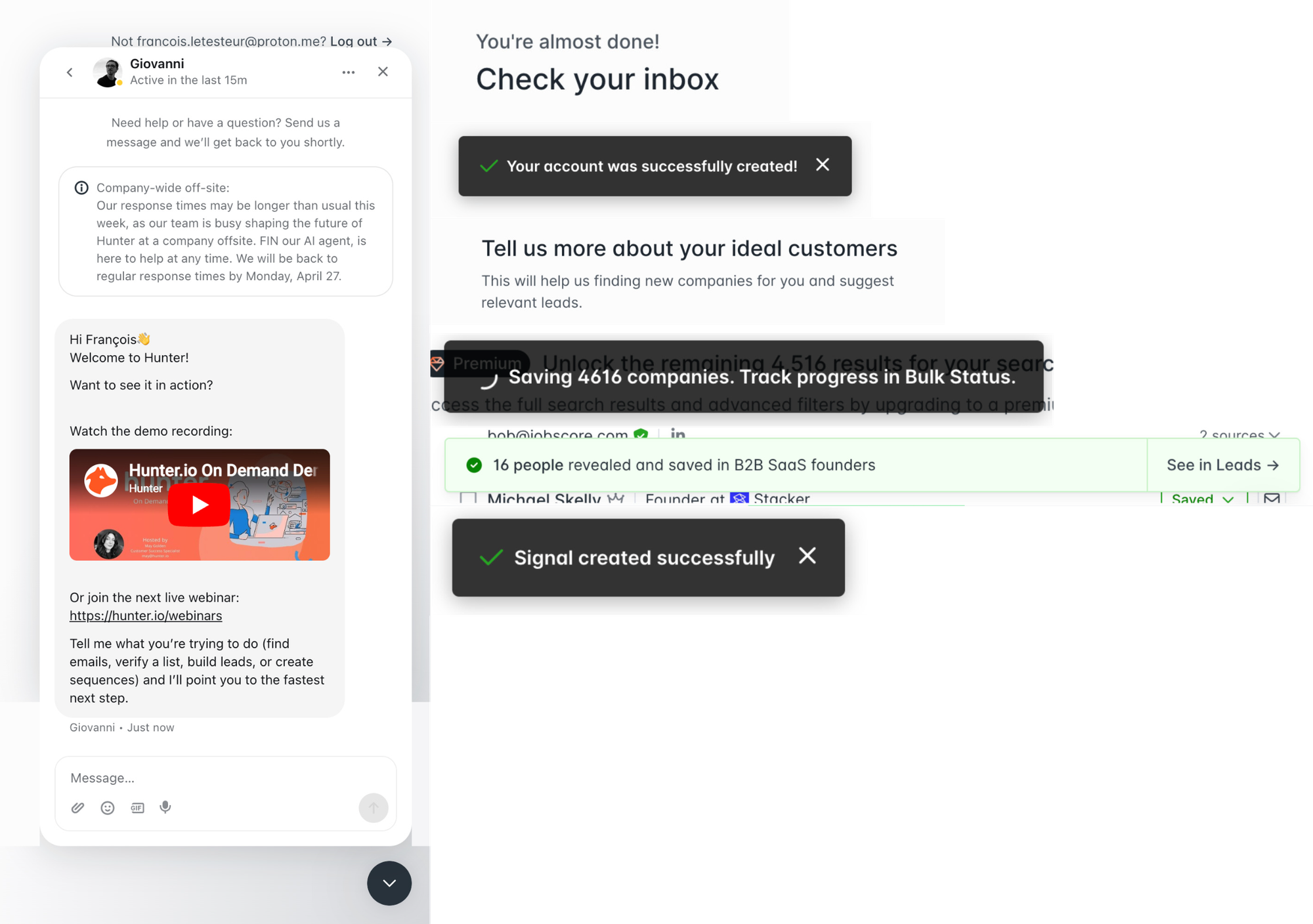
Every step also comes with micro-celebrations and encouraging copy that make progress feel rewarded, and the experience, human. Tiny touches, but they add up. You don't decide to keep going, you just... do.
When you stack a sequence of meaningful aha! moments, you also stack positive psych and strengthen the belief your product is valuable to your user.
Bonus — Trust-building at every step
This one deserves a mention because it's the cheapest layer to add and the one so many teams skip. I still remember some frustrating moments when I worked at companies where I'd push for a few tickets about making the UI/copy more trust-building, more encouraging, only to hear this would have no impact and "every dev is so busy right now, we can't bother them with such futilities".
Well, f@#% that.
Email verification. Password setting. Product configuration. The kind of steps most (yes, most) products treat as tax to be paid before the real onboarding begins. Hunter treats them as moments to be encouraging, conversational, guiding and clear about what's happening next.
The tone of voice is friendly (without being cringe tho). Micro-celebrations are placed where they actually mean something. Every step makes you feel like there's a human on the other side of the product, not a form factory.
It may sound soft or cheesy or irrelevant or impactless or whatever, but trust compounds. By the time the user reaches their first meaningful win, they've had a dozen small interactions that all said the same thing: "this product is on your side. We root for you."
That's what can make the difference between a product you love, stick with and advocate for, even if all these things only happen at the subconscious level.
What to take from this
Hunter's onboarding works because it has the discipline to cut.
Cut the features that don't serve the user where they are when they start. Cut the questions the product doesn't actually need answered. Cut the filter panel that would feel like every other prospecting tool. Cut the email verification gate (well, almost: Hunter does verify earlier than Stripe for example, but the rest of the flow is so well shaped that it doesn't hurt momentum the way it usually does).
What's left is a sequence of small, meaningful micro-wins that all compound toward the same destination: the user getting a list of real people they can reach out to, and believing the product can keep delivering that.
That's the move. Cut everything that isn't about the first meaningful win. And reshape what remains so it feels like progress, not setup.
"Perfection is not achieve when there is nothing more to add, but nothing more to remove" (or something along these lines) — Antoine "The Little Prince of Onboarding" De Saint-Exupéry.
I love this principle so much I made it my default scan: what can we remove to make this better?
If there's only ONE lesson from Hunter's onboarding,
it's that good onboarding isn't about showing the product. It's about removing every step that isn't the first meaningful win, and reshaping the ones that remain so they feel like progress instead of setup.
If a step in your flow doesn't directly move the user toward their FMW, it's not onboarding. It's noise. And noise is what makes users close the tab.
[Update]
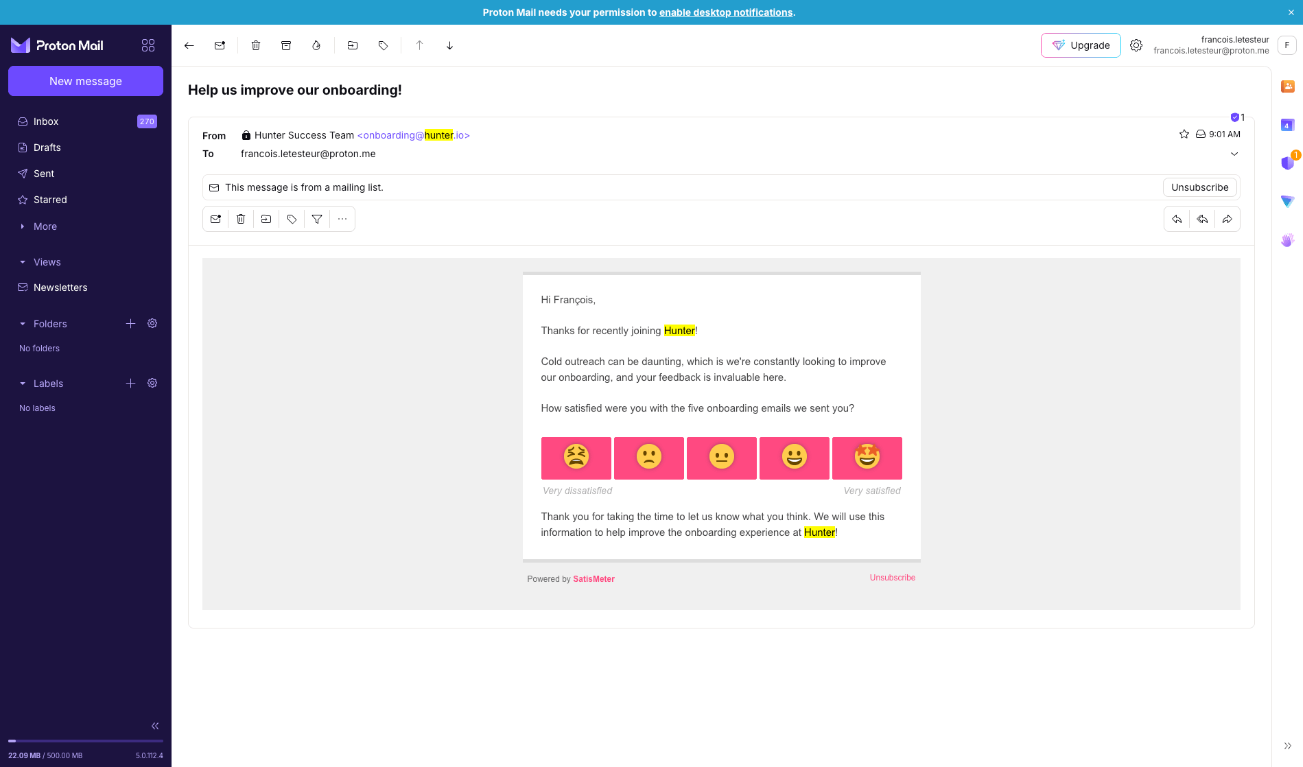
I'm adding a bonus move as I just received an email from Hunter that's quite a rare move. Maybe the first time I see it actually:
A "help us improve our onboarding" email!
I'm speechless. It's always moving to see a new animal into the wild for the first time.
No need to elaborate on the virtues of asking user feedback specifically about onboarding, and I won't argue on how they could improve the questions of the form (at least for now). Just wanted to highlight this great activation move.
I hope this was valuable.
PS_
Want me to review your onboarding for $0? Apply here.
I'll share a miro board with screen-by-screen annotations and top recommendations I'd work on first, and why. I'll look at it through both a strategic, user psychology and UX lens, based on the same system I use with clients.
(No commitment, no following harassment with a drip email campaign or whatever)
Senior Product Designer • Activation/Onboarding Specialist
Helping B2B SaaS founders activate, convert and retain more users
Let's talk → LinkedIn | fsimitchiev.com