
What needs to be true for someone to sign up for your SaaS... and what your onboarding needs to protect

• a signup isn't random; it's the result of specific beliefs aligning: "this product is useful, easy enough to try, and I trust it enough to hand over my details"
• those beliefs are fragile and they're exactly what your onboarding needs to protect before friction, doubt or a confusing screen erodes them
• not all signups arrive equal: someone who found you themselves, someone referred by a friend and someone whose boss forced them all need a very different onboarding approach
• the one question that rules them all: how long does it take a new user to reach the moment your best users describe when they say "that's when I got it"?
A signup feels like a win. Someone found your product, went through your funnel, and handed over their email. Dopamine.
But a signup isn't random. It's the result of very specific conditions aligning in someone's mind. Conditions that are often more fragile than they look (especially in competitive B2B markets).
Understanding what those conditions are changes how you think about onboarding. Because if you know what had to be true for someone to sign up, you also know exactly what you need to protect in the first few days, so you earn adoption, habit formation and long-term retention.
Let's break it down.
The conditions that must align
When someone signs up for your product, something specific happened in their mind. They:
- associated your product with a clear job they need to get done
- believed it would actually be useful to them (perceived usefulness)
- judged it easy enough to be worth trying (perceived ease of use)
- had enough trust to hand over their details
- found the signup process frictionless enough to follow through
These are the components of the Technology Acceptance Model (TAM), a framework from behavioral research that explains how and why people adopt new technology (and products).
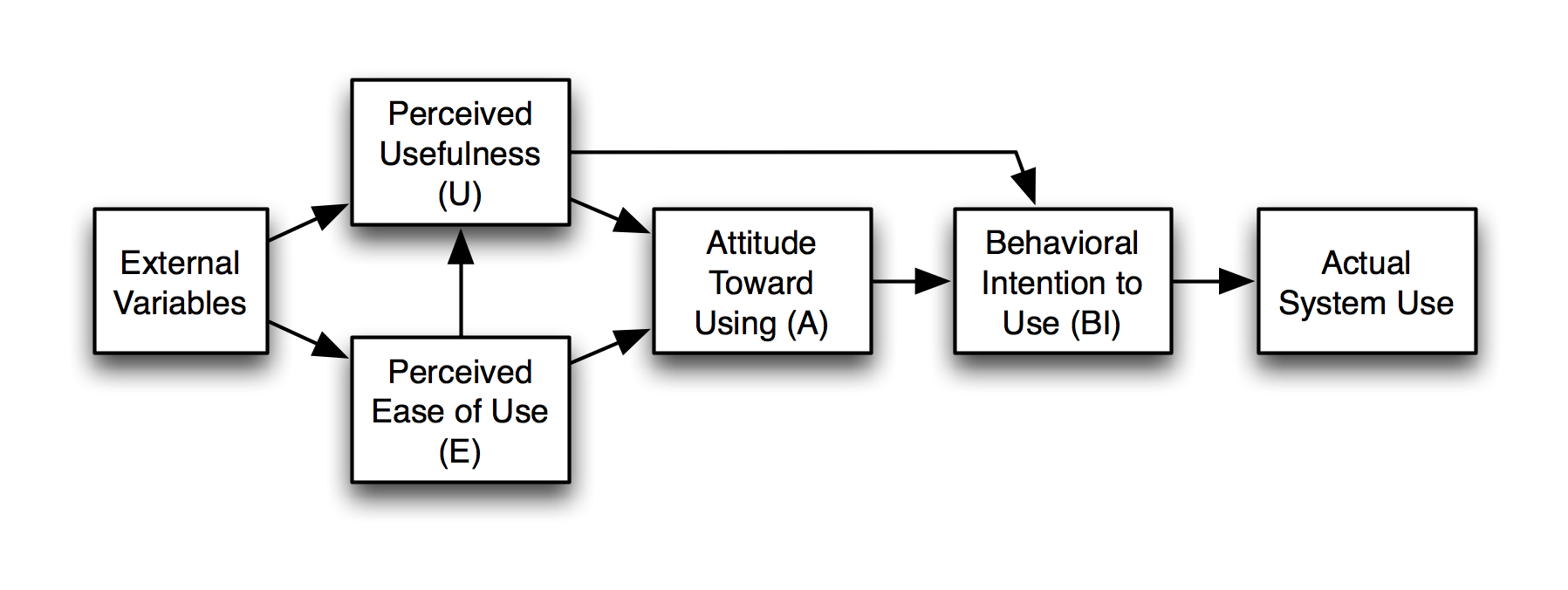
The key insight isn't the model itself. It's what it tells you about the state your user is in the moment they sign up: They arrived with a full tank. They have momentum, hope and a specific belief: "this product might help me".
That belief is everything you need to protect and reinforce. And it's more fragile than you think.
How those conditions get met (and why it matters)
Not all signups arrive at those conditions the same way. There are mainly 3 scenarios, and each one has different implications for how you onboard.
1/ They found you themselves
An ad, a post, an article... something caught their attention. If they made it all the way to signup, it means they got hooked, then curious, saw relevance, and felt enough hope that your product could genuinely help them get unblocked or do a job better.

This is your most motivated signup. But their belief in your product is based entirely on your marketing; on a promise you made. They haven't experienced anything real yet.
So what? The gap between what you promised and what they experience in the first session is where this signup lives or dies. Their perceived usefulness is real but fragile. It stems from your positioning, not from actual value. Onboarding needs to close that gap fast.
2/ Someone they trust recommended you
A colleague, a friend, a relative. The TAM conditions still apply, but the trust transfer dramatically changes the equation.
Here's what's at play psychologically:
- social proof and borrowed trust: they transfer the trust they have in that person onto your product (“if it works for them, it’ll work for me”), which reduces perceived risk and skepticism
- uncertainty reduction: a real person’s experience kills the “maybe it’s just good marketing” doubt and reassures them the product actually delivers on its promise
- relevance filtering: recommendations are almost always contextual (“this will help you do X”), so the user assumes a strong problem–solution fit without having to research alternatives
- belonging and professional identity: using the same tools as peers or a respected colleague reinforces “this is what people like me use,” creating subtle pressure not to be left behind (aka, FOMO)
- expected support and smoother onboarding: they implicitly expect that the person who referred them can help them get started, which lowers the perceived effort and friction of trying something new
This signup arrives with higher trust and lower skepticism than someone who found you through an ad. Their tank is fuller.
So what? This is your highest-quality signup, and the strongest argument for keeping your existing users genuinely happy. A happy user who recommends your product is doing your best acquisition work for you. Don't waste it with a mediocre onboarding experience.

3/ Their company or boss made it mandatory
In this case, there's no personal choice. No funnel journey, no TAM evaluation, no trust-building needed from you. They signed up because not doing so risked their boss being mad at them, or feeling like they didn't belong to their team anymore, or struggling to access to shared workflows.
Here's what makes it so tricky:
- compliance, not conviction: they comply out of obligation, not intrinsic motivation or belief in your product's value. Without quick proof of usefulness, "resentment" builds fast
- no perceived ownership: forced adoption skips the emotional investment of “I chose this”. They feel like a simple pawn, not a champion, so don't expect them to be proactive in learning and using your product
- skepticism from lack of agency: “if my boss picked it, it’s probably overhyped or the cheapest option”. Pre-existing doubt means you must over-deliver on perceived usefulness and ease of use to convert them and earn adoption and proactive, repeat usage
- dependency on social proof within the team: they’ll look to colleagues for validation (“does this actually work for you? Is it good?”). If early adopters hate it, negativity can spread like a fire in an august dry pine forest
- high disengagement/churn risk: they may not churn (because they fear their boss) but they may just do the bare minimum within your product, and ghost at the first opportunity (when their boss gives some slack and starts fighting their next battle or if they all went into a protest at the office to go back to their beloved previous tool... "habits have hard skin" as we say in France)
This signup may have the highest initial retention (they're stuck with you) but the lowest long-term loyalty. Delight them fast or they become zombie users — or worse... active detractors.

So what? With this user type, no amount of clever onboarding copy fixes a motivation problem. What moves the needle is early, tangible proof of value. And social proof within the team. If you can turn one early adopter into a visible internal champion, the rest of the team will follow.
Why this matters before day 1
Here's the thread that connects all 3 scenarios: every user who signs up arrives with a specific set of beliefs about what your product can do, how easy it is, and whether it's worth their time.
Those beliefs are the conditions that made the signup possible.
And they're the exact same conditions your onboarding needs to protect, reinforce, and validate... before friction, doubt or a single confusing screen erodes them.
Too many products fail at onboarding because they don't understand what it has to protect: trust and belief.
Here's how to find out if yours does.
Are you protecting the belief that got them to sign up?
Here are a few questions you can check your onboarding against:
On the promise
- Does your first onboarding screen/welcome email remind users why they signed up (or does it immediately ask something of them)?
- If you put your landing page copy next to your first onboarding screen, do they feel like the same product? Or is there a gap between what you promise users and what they can achieve within your product?
On perceived usefulness
- Where in your onboarding do you first prove your value. Not describe it, not promise it, but actually make users experience it?
- If a new user spent 10 minutes in your product right now and closed the tab, what would they have experienced? A meaningful moment of value, or a complex, endless setup process?
On perceived ease of use
- What's the first moment of confusion in your onboarding? (There is one, that's guaranteed)
- How many steps does a user have to complete before they experience anything useful and meaningful?
On trust
- Does anything in your first session feel inconsistent with what you promised before signup? A feature that's harder than expected, a workflow that doesn't quite work, a "coming soon" placeholder?
- If a skeptical user (someone who didn't choose your product and arrived with doubts) went through your onboarding today, what would they conclude?
The ONE question that rules them all
If you don't know the answer to that last one, that's definitely where to start.
PS_
Curious what happens next? I wrote about why users sign up but disappear after day 3, and what's actually draining that tank.
Senior Product Designer • Activation/Onboarding Specialist
Helping B2B SaaS founders activate, convert and retain more users
Let's talk → LinkedIn | fsimitchiev.com