The system I use for onboarding design

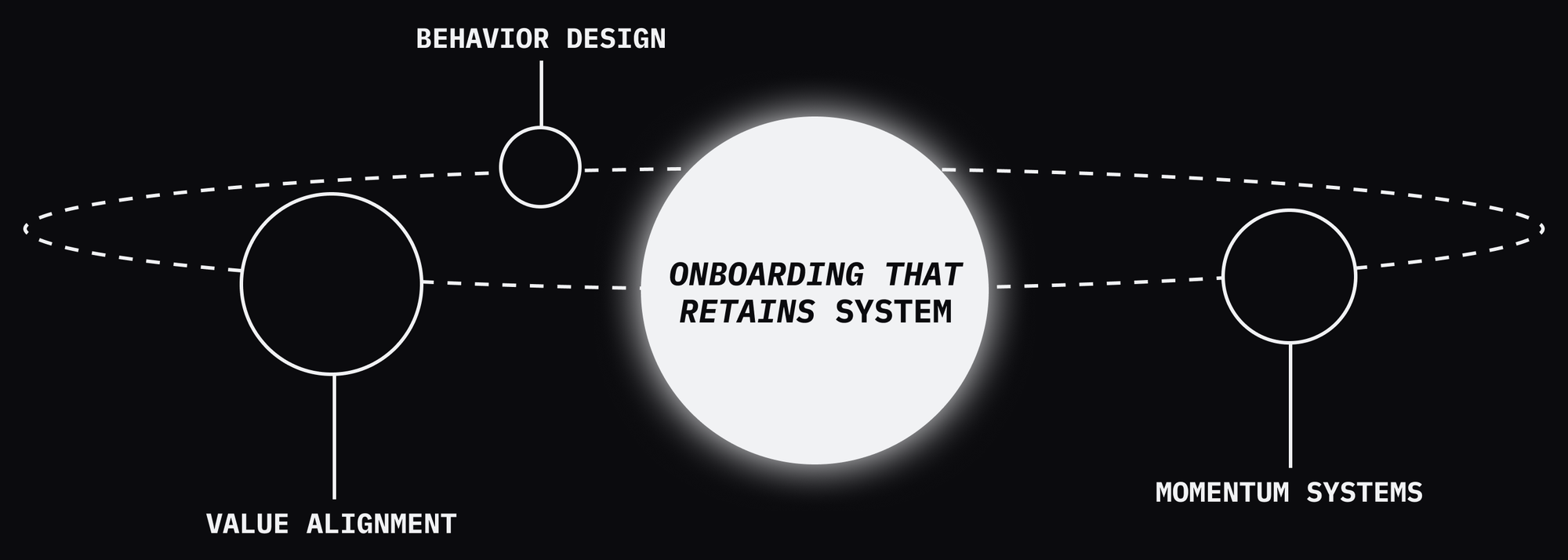
Activation is your make-or-break moment. If users don't experience real value early enough, everything downstream (retention, revenue, growth) becomes much harder.
The goal of onboarding:
• bring users to a first moment of meaningful value — a first meaningful win — so their belief shifts from "this could be useful" to "this is actually working, for me!"
• ensure users keep coming back until they form a habit, and going back to their old ways of working would be weird
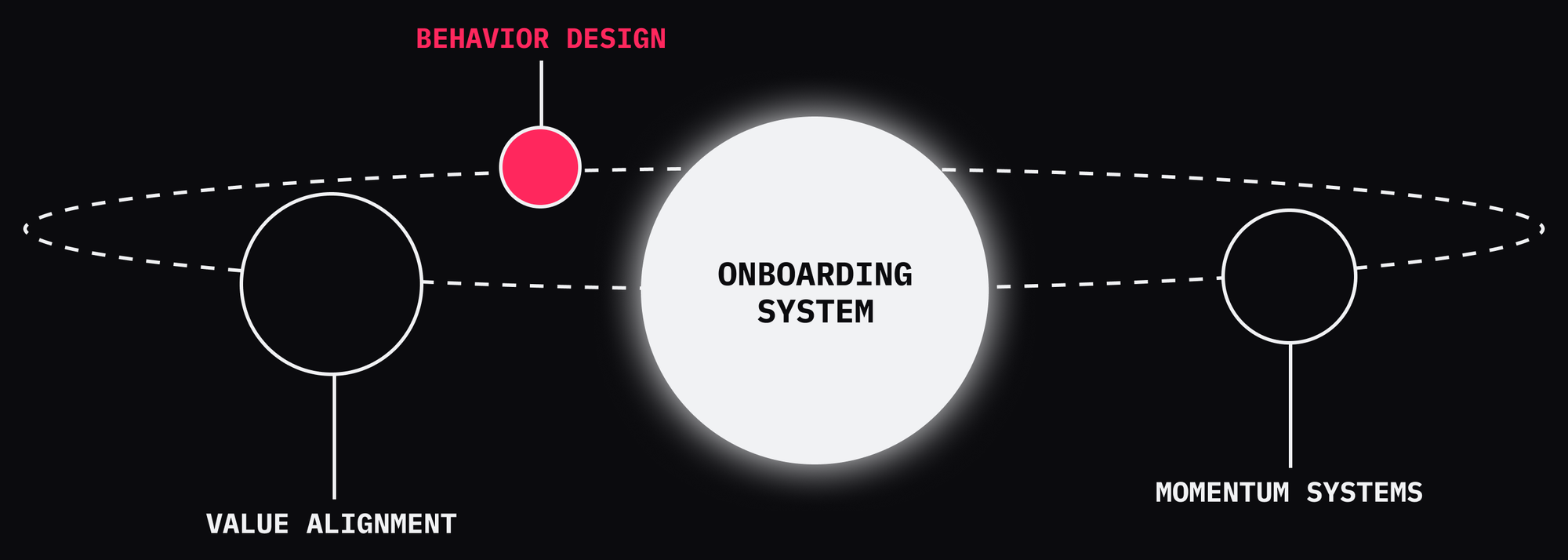
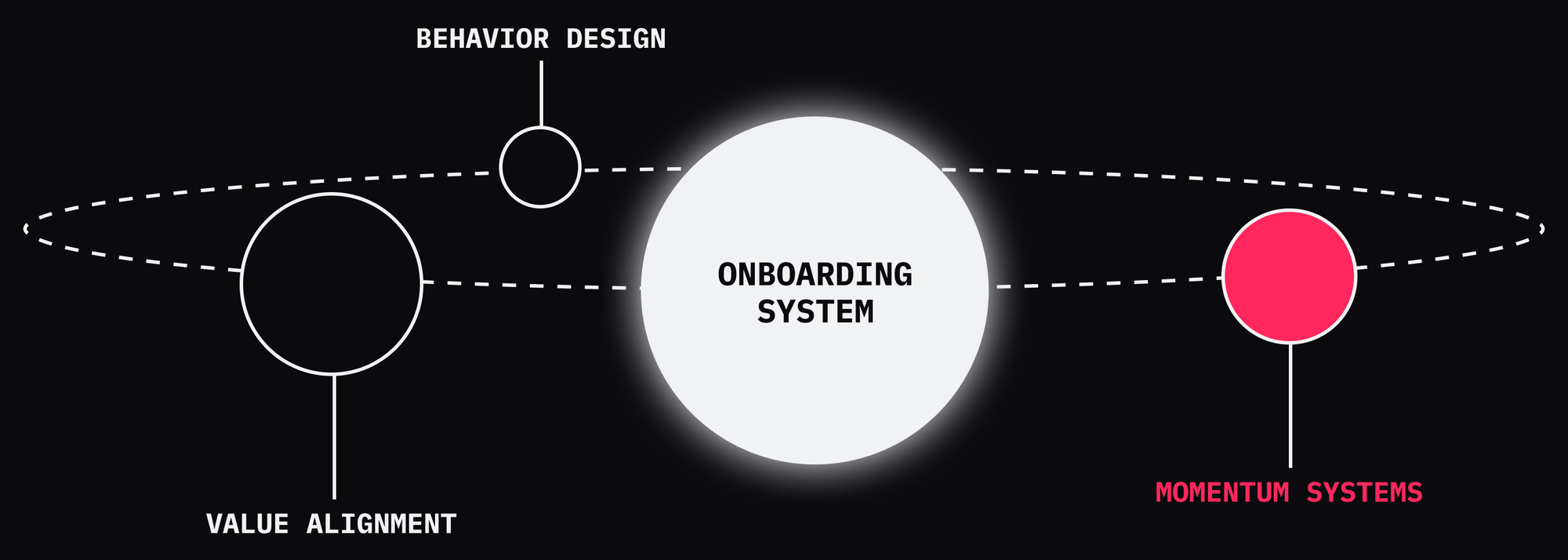
The system has 3 parts: align on your value and what success looks like for your user, design an experience that builds momentum, reduces friction and makes progress feel easy, and build engagement loops that bring users back.
Here are the 7 steps:
1. know exactly who your user is and what their first meaningful win is
2. remove what's blocking them (psychologically, not just technically)
3. map the shortest path to first meaningful win
4. fill knowledge/skill gaps along the way
5. nudge users back so they stay engaged and on track
6. elevate the first win moment so users experience it stronger
7. design repeat usage loops to keep them coming back and form habits
The premise
Building a truly valuable product is not enough anymore to convert and retain users/customers (especially in highly competitive markets).
Early product adoption and long-term retention are things that have to be earned. Long-term retention can’t happen without early adoption, and early adoption can’t happen without habit formation, which can’t happen without successful activation.
It’s like with human relationships. If you give a negative first impression, everything downstream becomes much harder. That’s why activation is so critical. It’s the tipping moment where a user experiences meaningful value for the first time, and shifts from “let’s see if this works” to “wow, it works”.
Activation is when you end the first date on a high that gives the user a reason to come back for more. The first date earns the second date, and so on and so on… until a habit is formed and the product is adopted by the user.
And exactly like with human relationships, adoption and retention don’t happen uniquely because your product delivers functional outcomes (by its features). It also happens when the user has built enough trust (”this product and the company behind it genuinely want me to succeed”), confidence (”this is easy to use and I keep winning with it”) and belief (”if I keep using it, I’ll reach my goals and achieve a better version of myself”).
Those are not things we consciously think, but they are the essential components of product adoption, which is no less than a matter of behavior change. And behavior change is not only about features and logic. It’s above all about psycho-logic.
That’s why I approach activation and onboarding design with a psychological and behavioral lens in addition to the main north-star every activation strategy should aim for: deliver a first moment of meaningful value — a first meaningful win — as early as possible.
And from there, we can expand to building repeat engagement loops to encourage habit formation, conversion and early adoption, which lead to long-term retention (and real growth because until the cost of acquisition (CAC) for a user has been paid back from the revenue they generate, we’re still paying for that user to stick with us).
Here’s the approach I use for activation and onboarding work. It’s based on a 3-component system.
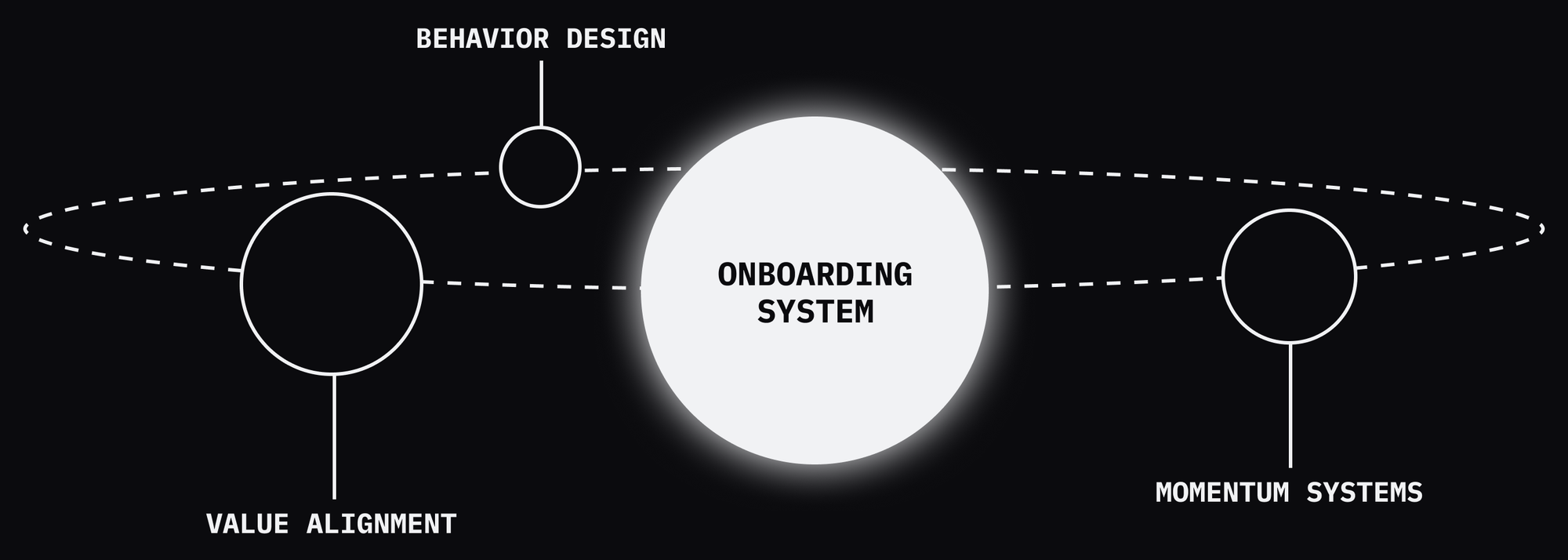
1/ Value alignment
The product clearly helps the right users succeed.
2/ Behavior design
The experience makes progress obvious and easy.
3/ Momentum systems
Users return repeatedly and start building habits.
When these 3 things align, activation and retention become much easier to improve. When they don't, growth tends to stall.
The 7-step process
01 → who's the user and what's their win
02 → what drives and blocks them psychologically
03 → map the path informed by that psychology
04 → fill the knowledge/skill gaps along the path
05 → nudge them so they stay on track
06 → celebrate the first meaningful win
07 → bring them back
01 — Align on your ICP, value proposition and user success definition
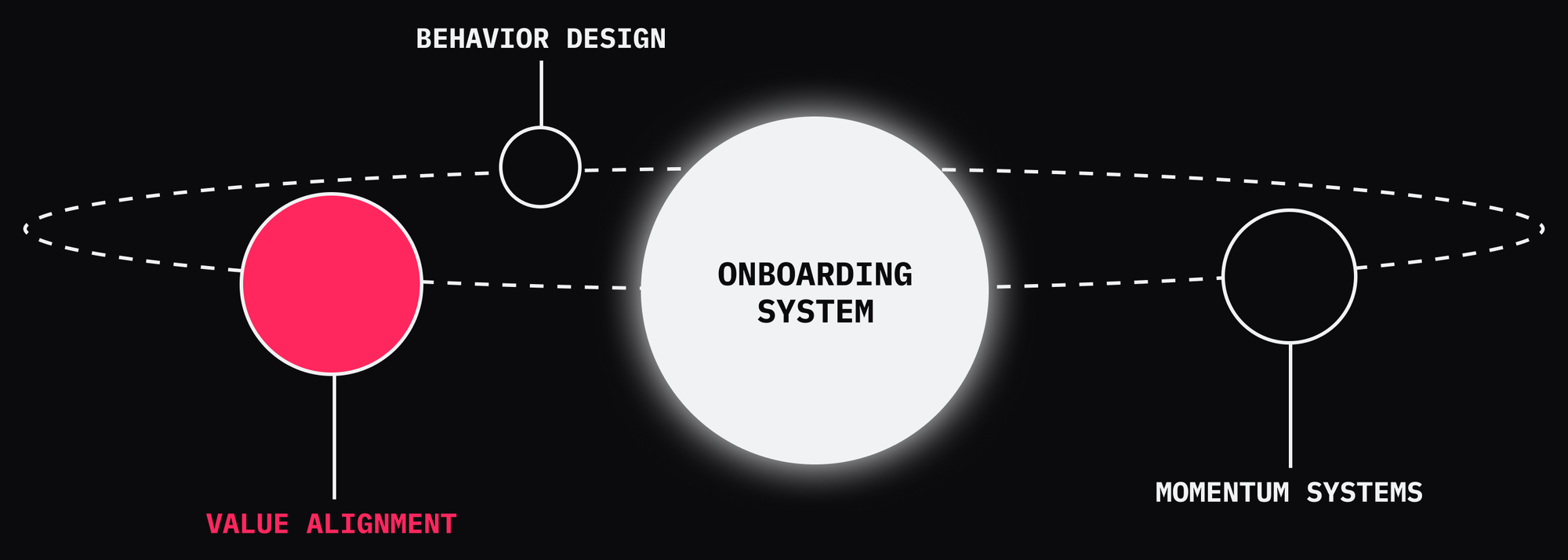
Before auditing or designing anything, we need to be clear on the core 3:
- who is/are your ideal user(s), aka who benefits most from your product
- (for each segment) what does success look like, for them
- (for each segment) what’s the first meaningful win
To get clear on these, we map current vs future states for each user segment, prioritizing the one your product attracts most and serves best:
- what they are trying to accomplish
- why it matters to them, and why now
- what options they have already tried
- why these options are limiting or blocking
- how your product is the best fit to their needs
Getting clear on these will help us determine what winning with your product looks like for your users, and what’s the first meaningful win onboarding will lazer focus on delivering asap.
This will also help us figure out which features should be exposed to new users, and which ones should not (at least, not immediately after signup).
Outputs:
- defined and prioritized ideal user segments
- clarified value proposition and user success definition
- defined first meaningful win for the most relevant user segment(s)
Important note:
Depending on the data and user feedback you have, we may need to run some surveys + interviews to gather what’s missing. The goal is to avoid guesswork as much as possible. Taking the necessary time to solid research will save us lots of hassle and unnecessary work down the line.
02 — Identify the forces that drive and block behavior
Next, we need to ensure users actually start engaging with your product. And for this, we need to make sure they:
- have enough trust and motivation to act
- feel reaching their fmw will be easy and quick
- have all they need to successfully use your product
And we also need to understand the hidden forces that could block behavior:
- objections (emotional, financial, social)
- existing habits and limiting beliefs
- cost of switching
Outputs:
- analysis per journey step: motivation level, friction points, prompt clarity
- specific interventions to increase motivation or reduce friction at each step
03 — Map the ideal path from signup to first meaningful win
Now that we have the direction on the map, we can start drawing the optimal path to get users there.
We map and audit your current user journey and brainstorm on how to optimize it so new users reach their first meaningful win as early and easily as possible.
Outputs:
- a step-by-step map of the ideal signup-to-fmw path
- quick wins to improve the current user journey
- an optimal activation path hypothesis
Important note:
At this point, all we get is a strong hypothesis about the best way to get new users to their fmw. But until we validate it in real-world conditions, it hasn’t earned the right to be built. That’s we run a minimum viable experiment (MVE) playbook to test our hypotheses as we go, so we avoid costly unnecessary dev.
04 — Provide what users need to know or be able to do
Even motivated users with low friction can still fail if they lack the knowledge or skills to take the next step. For each stage of the journey, we identify potential knowledge gaps (they don't understand what to do), skill gaps (they don't know how to do it), and value gaps (they don't yet see why it matters).
Then we design the right support for each: tooltips, empty states, checklists, short tutorials, example data… the minimum guidance needed, delivered at the right moment.
Outputs:
- a gap map per journey step: knowledge, skill or value gaps
- recommended guidance type for each gap (tooltip, tutorial, checklist, example, etc.)
- principle: as little guidance as necessary, but as much as needed
05 — Design behavior-based nudges for each stage
Good onboarding doesn't stop at the in-app experience. Users are busy, they’re juggling many tasks a day on many tools, life happens and tabs get closed. To help users stay on track, we design a nudge sequence that runs in parallel (emails, in-app messages, notifications) triggered not by time but by user behavior.
For maximum impact, it must feel personalized and meet each user where they’re at. If a user completed step 3 but hasn't returned in 48 hours, the nudge is different from someone who hasn't started at all. The goal is personalized momentum, not generic drip campaigns.
Outputs:
- behavior-triggered nudge map: condition → message → goal
- copy direction for each nudge
- channel recommendation (email, in-app, Slack, etc.) per nudge
06 — Design the first meaningful win celebration moment
Reaching the FMW is the whole point. It should feel like an arrival, not an accident. We design an explicit, elevated moment of celebration (visual, copy, or both) that names what the user just achieved and why it matters.
And then we create a clean exit: the experience ends on an emotional peak. The user feels they’ve accomplished something meaningful and gotten value from your product. Next, they should have clear next steps, and also be able to leave your product on this first meaningful win, so they store positive emotions and associations with it, making them more eager to come back when prompted next time.
Outputs:
- fmw celebration design: what it looks like, what it says
- a clear exit point + clear next step
- no dead ends: the exit is an invitation, not a wall
07 — Design the loop that brings them back
One win doesn't create retention. Habits do. We design a re-engagement loop that invites users back into the product to repeat their win and/or explore new features as they become relevant, and gradually deepen their engagement.
Outputs:
- re-engagement loop design: trigger → action → reward → investment
- "repeat win" scenario: what does a second, third session look like?
- meaningful activation + early habit indicators to track progress
Operating principles
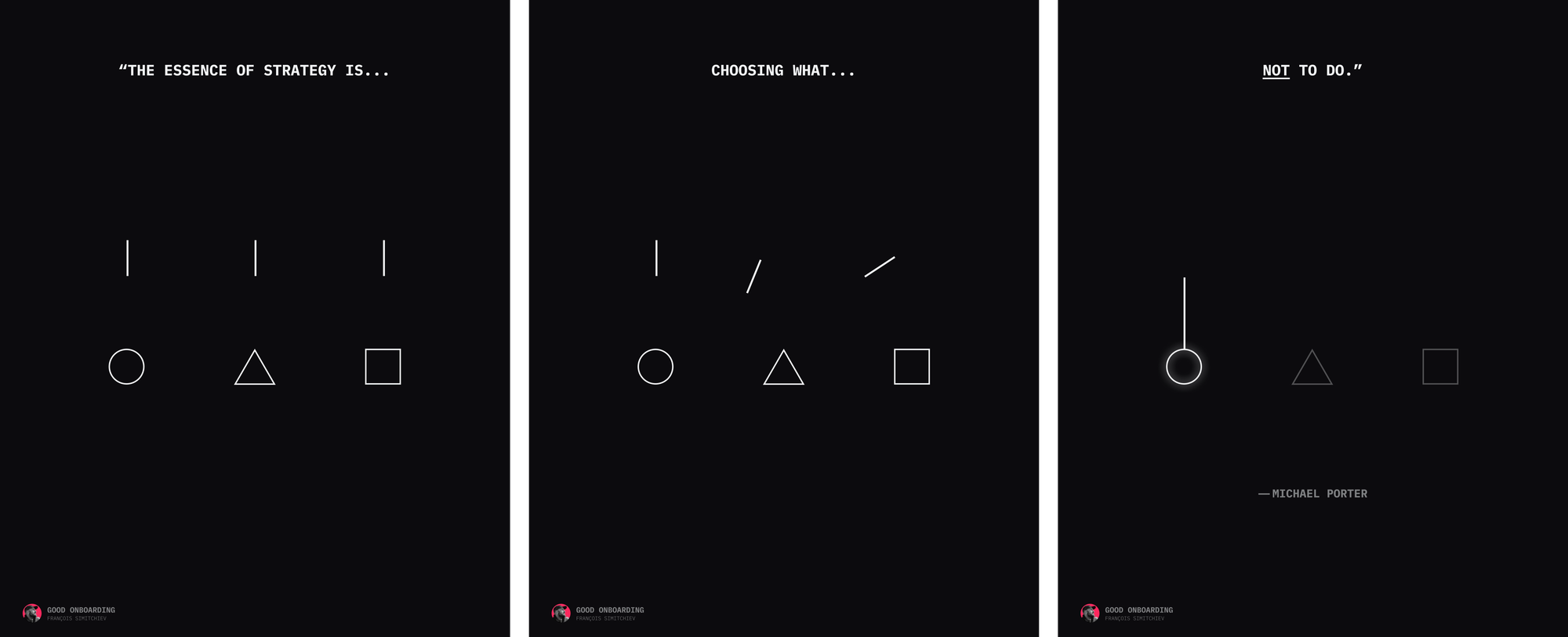
1/ Strategic focus
Growth doesn’t come from improving everything at once, but from identifying the main constraint and solving it first.
That’s why we focus on a single highest-leverage priority at a time.
2/ Progressive Minimum Viable Experiments (MVEs)
True strategy is about our ability to form hypotheses and our agility to test them, learn and iterate. Our goal is to repeat this loop as quickly and often as possible to build confidence in our decisions:
hypothesis → focused experiment → iterate, scale or kill.
The goal: reduce time-to-truth, reduce time-to-results, and maximize leverage ( even with constrained resources) based on validated experiments and data, not theory and guesswork.
Hopefully, this has helped you see how I approach things and have a taste of how working together looks like. From here, you can take one of these paths:
- you can use this on your own as a guide
- or we could work together on optimizing your onboarding
If you'd like to work together on your onboarding, send me a DM on LinkedIn.
I also offer to review a few onboardings for $0 each month.
Send me your onboarding flow and I'll record a short Loom walking through what I'd work on first, and why. I'll look at it through both a strategic, user psychology and UX lens, based on the same system I just walked you through.
(No commitment, no following harassment with a drip email campaign)
Senior Product Designer • Activation/Onboarding Specialist
Helping B2B SaaS founders activate, convert and retain more users
Let's talk → LinkedIn | fsimitchiev.com