
[🔬 onboarding dissection] Linear top 3 activation moves

Linear is a project management tool. I don't use it (companies I worked at were on the Atlassian suite so we used Jira) but I wish we were on Linear as it's so well designed for efficiency (and it's beautiful!).
But what makes it interesting in terms of activation is not exactly in the UX/UI.
It's in how Linear addresses a very important notion in B2B: company-wide adoption.
Because it's not the same to get our product adopted by single, isolated users vs having entire teams/companies adopting it. Especially when they're already using a competitor tool.
There are a few dimensions to consider when it comes to adopting a new tool at the company level (i'll write about them in a future post).
So for now, let's look at the top 3 things Linear does to encourage company-level activation.
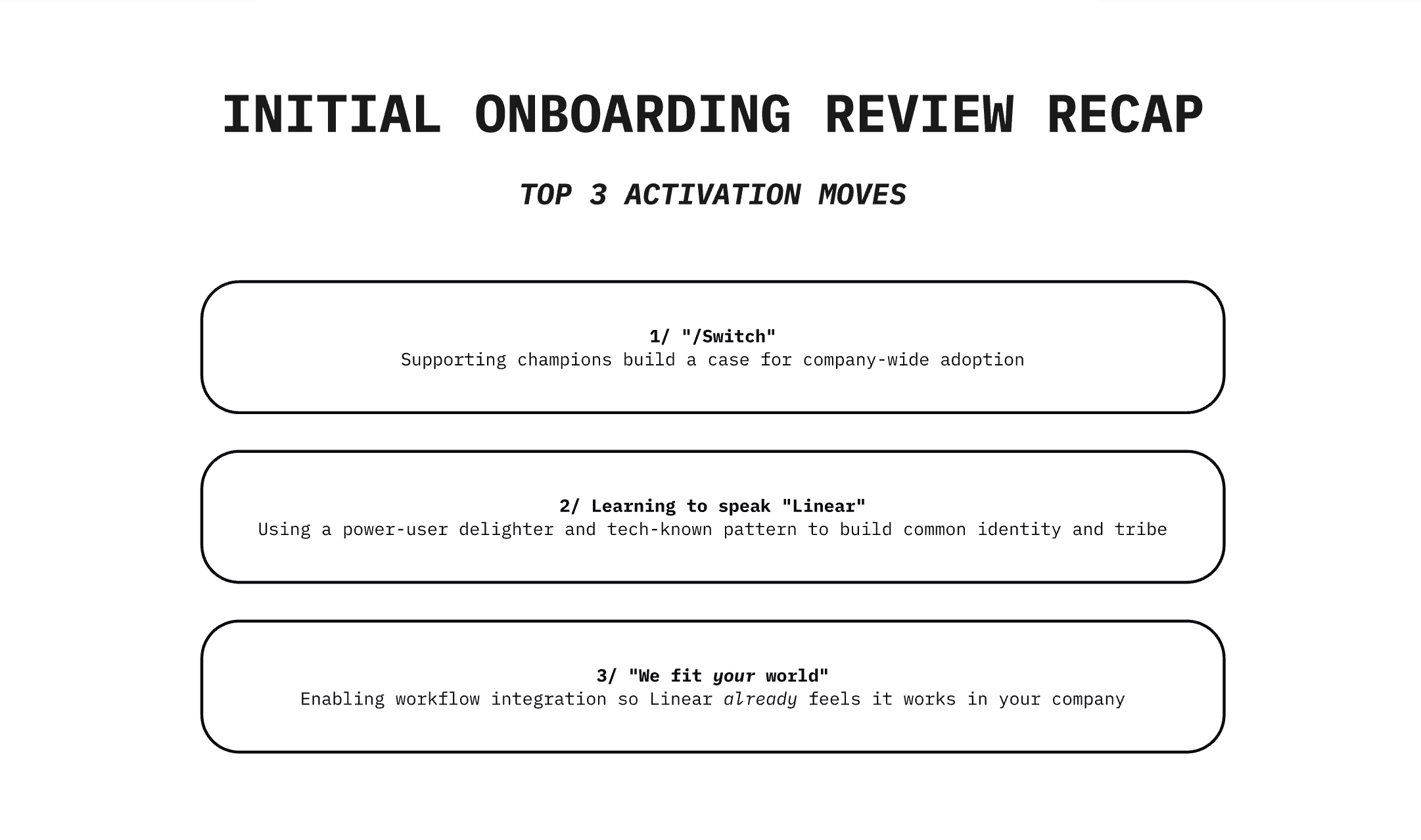
TOP 1 — "/Switch"
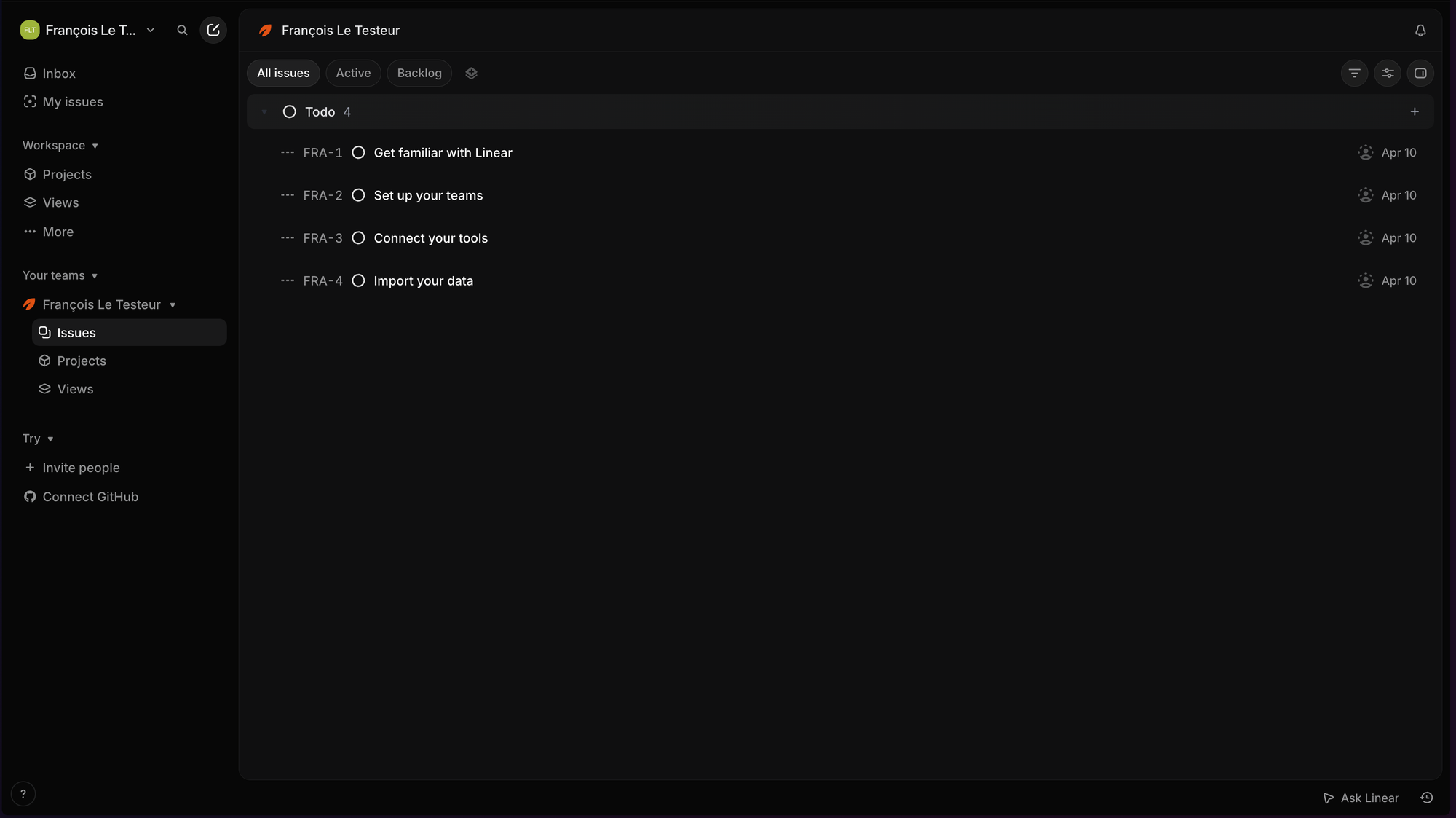
Once you land in the product and navigate to the Issues tab, you can find 4 Todo issues to get started with Linear.
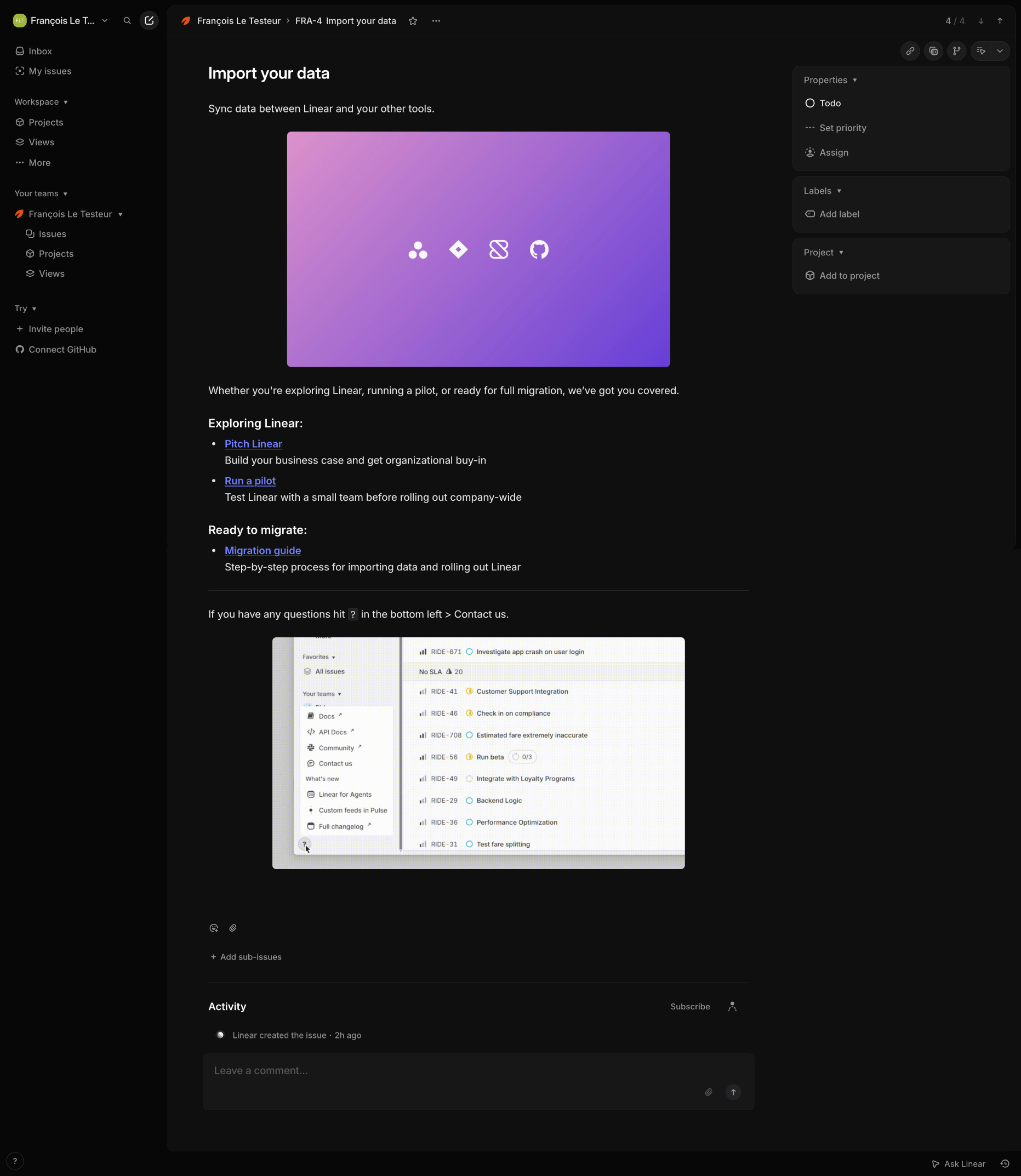
And the first thing I found very interesting is in issue #4 Import your data. Well there are actually 3 things. Links to guides for:
- pitch Linear
- run a pilot
- migration guide
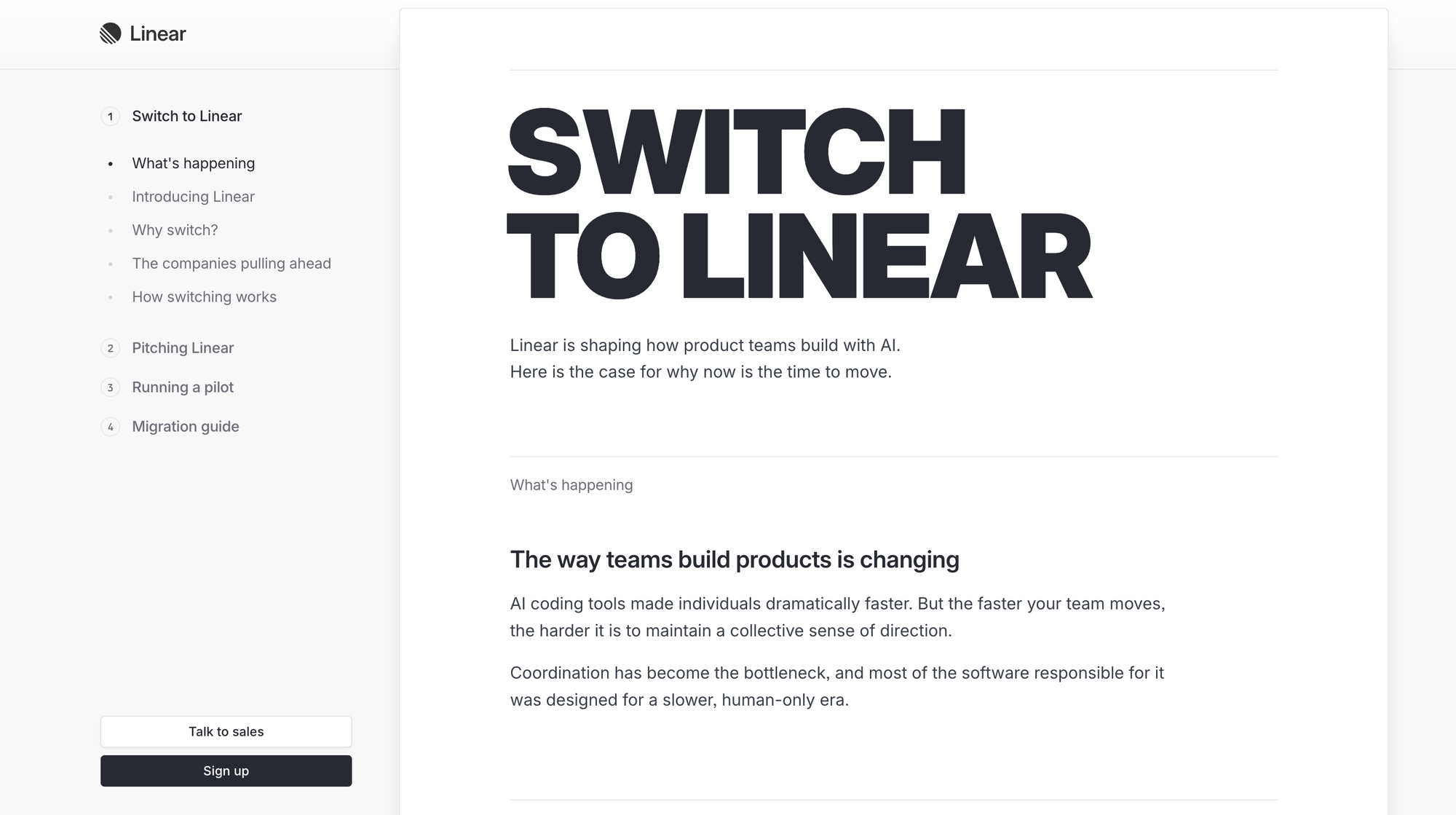
Clicking one of this links redirects the user to https://linear.app/switch where they can find a guide dedicated to helping them progressively... switch. To Linear.
Because they know there's quite a few obstacles to replacing a tool that an entire team already uses. Habits, existing workflows, the cost of migrating data, getting buy-in from people who didn't ask for this change.
This isn't a widely discussed topic and usually it's Sales' and CS's job to help champions implement the tool, not the product.
Linear decided the product could help too.
The /switch page isn't perfect. It's a lot of content to read and a champion pushing for internal buy-in might need a more actionable plan than ready-to-share written arguments.
But the intent is right. Linear knows the problem exists and built something to address it, inside the product, on day one.
And that's why in that /Switch page they also push for a "run a pilot" initiative where they suggest first steps toward team adoption.

And they go deep by including pre- and post-pilot surveys to show real data to build a strong, leadership-friendly case.
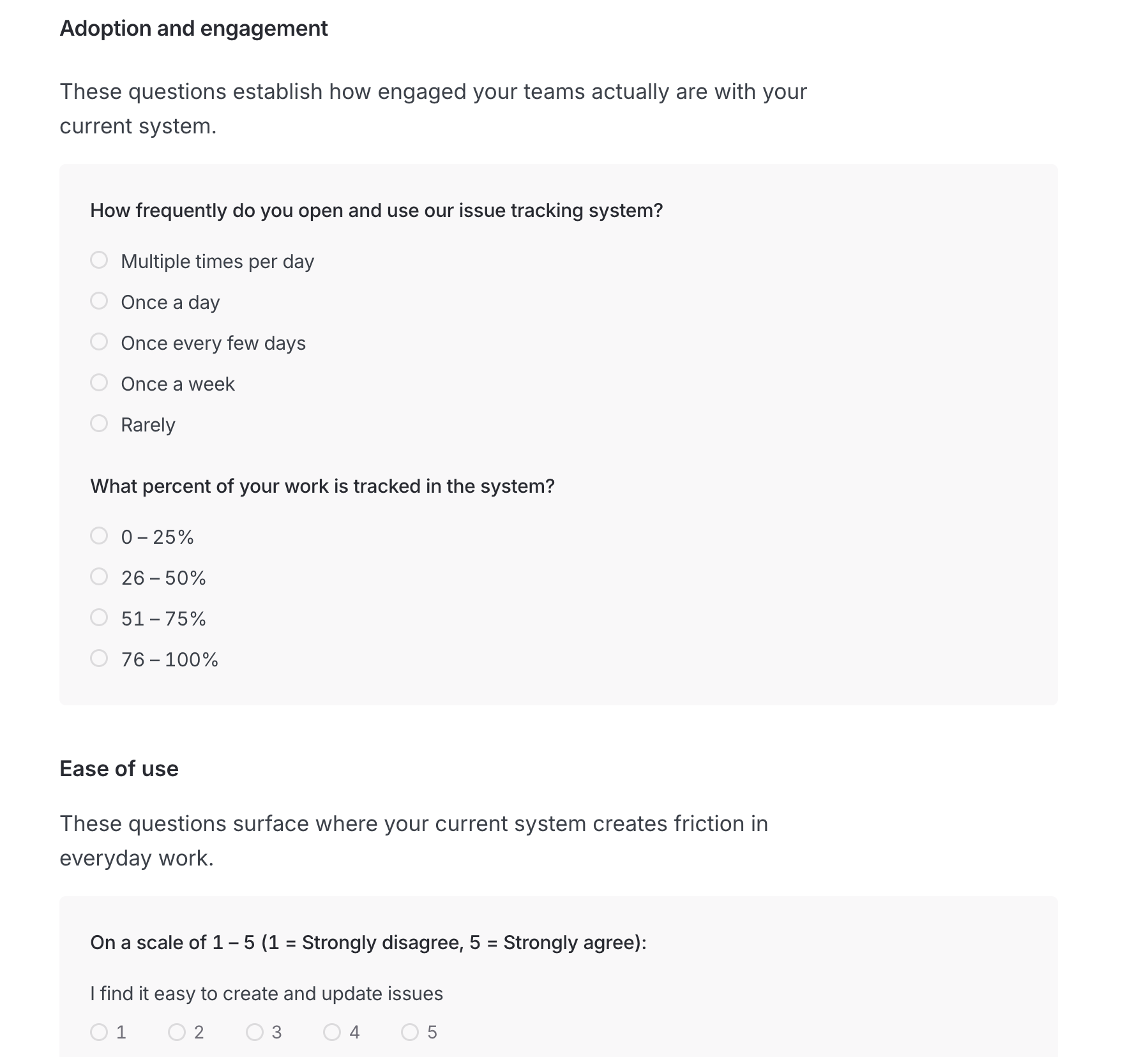
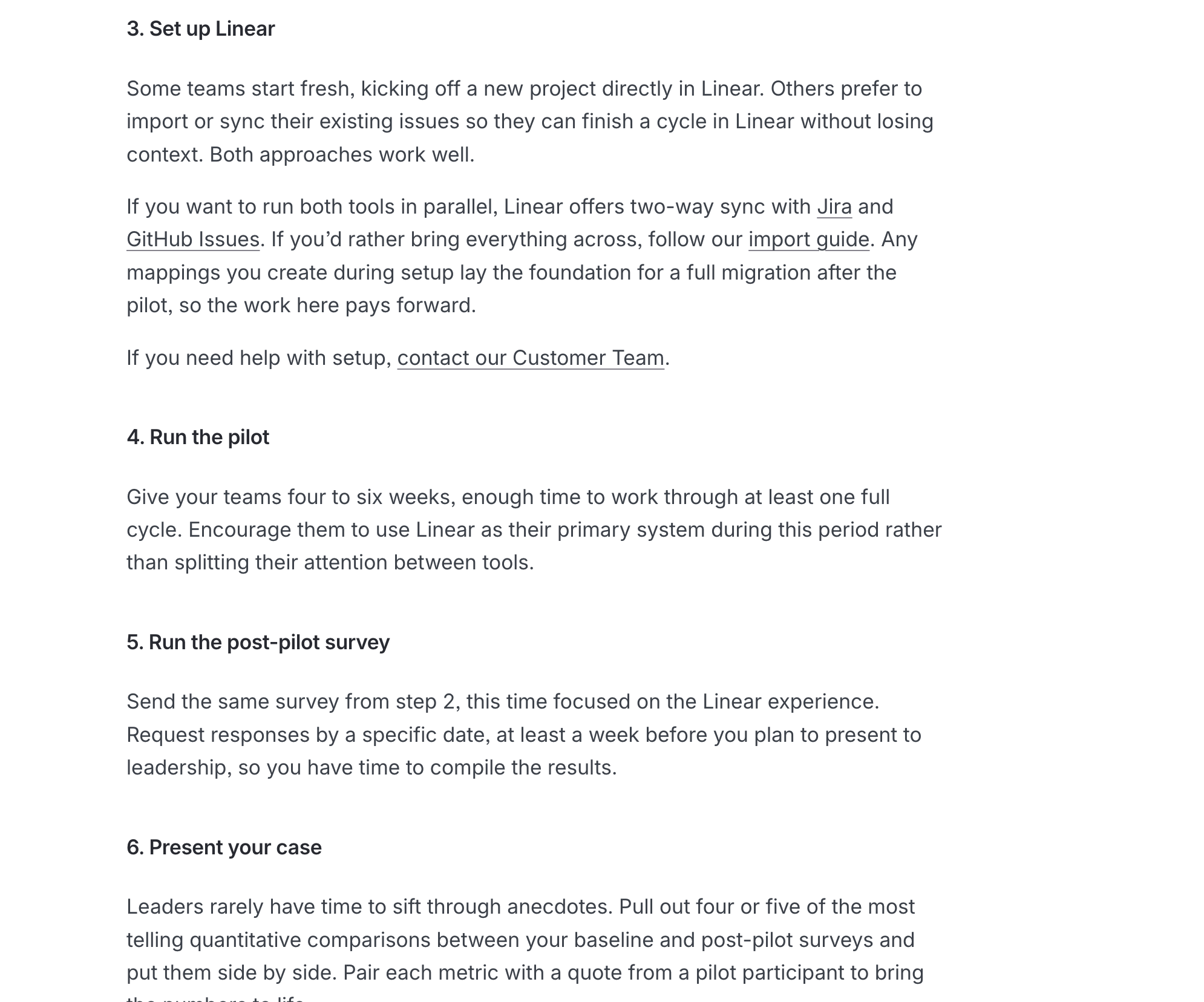
Linear basically gives you a step-by-step action plan to run a successful pilot and make a strong case for company-wide product adoption.
And to reinforce motivation they also use social proof with case studies of companies who adopted Linear. Notice what the 3 links do? they either:
- appeal to core values and identity "rebuild their product culture"
- lead with benefits and problems fixed "unify its product teams"
- show doesn't take that long "migrated 600 devs in a month"

On the psychological perspective, this is huge as it makes Linear help champions on a critical aspect of internal needs and goals: the social dimension.
According to the well known Jobs to Be Done theory, there are 3 layers of user needs:
- functional (what task/job i need to do)
- emotional (how i want to feel/not feel anymore)
- social (how i want to be seen/not seen anymore)
On the functional aspect, no doubt Linear does a great job with project management.
And they go a dimension deeper with the social layer: helping champions who want to have the tool adopted in their entire team/company succeed, and be seen as the smart person who brought in a tool that brought benefit to the entire company and business. Not just for their own workflow, but for the team, the cross-team collaboration, the budget and the execs.
TOP 2 — Learning to speak Linear
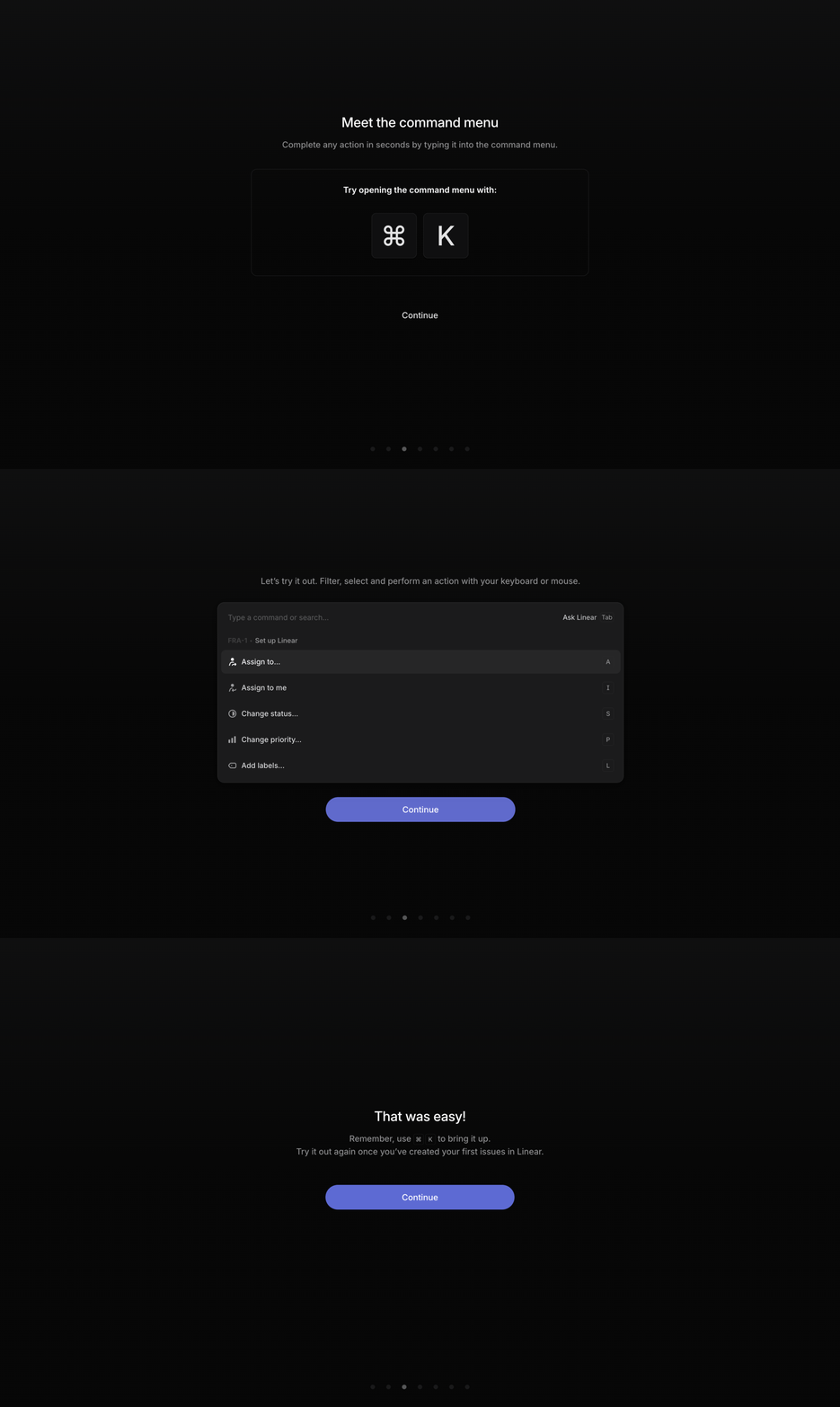
Early in the onboarding flow, Linear introduces you to the command menu. You're shown the Command/Control + K shortcut, and you actually get to try it (filter, select, perform an action).
It takes <10 seconds. It's not necessary (you could create your first issue without ever knowing this exists).
But that's not the point.
Most onboardings teach you features. Linear teaches you a way of working. Keyboard-first, no-mouse, fast. The command menu tutorial isn't about functionality; it's about character. This is how Linear people work.
And by "Linear people" i mean there is a tribe here. Developers, PMs and engineering-led teams who find Jira bloated and slow, who care about craft, who want their tools to feel as sharp as their code. Linear knows exactly who they're building for, and the command menu is an identity token. A language element. A cultural artefact. A signal that says: we get you, you're one of us now.
It's a delighter on the surface. But underneath it's identity work. By the time you've finished the tutorial, you don't just know how to use a shortcut. You know what kind of tool this is and what kind of person uses it.
TOP 3 — "We fit your world"
Many onboardings I see push for setting up integrations before it even becomes relevant.
Many times, new users get introduced to features and/or asked to configure stuff that don't deliver immediate value. They're intermediate/advanced steps in the user journey while the user who just signed up is a beginner.
But for a project management tool like Linear, integrations actually make sense. Especially, Github.
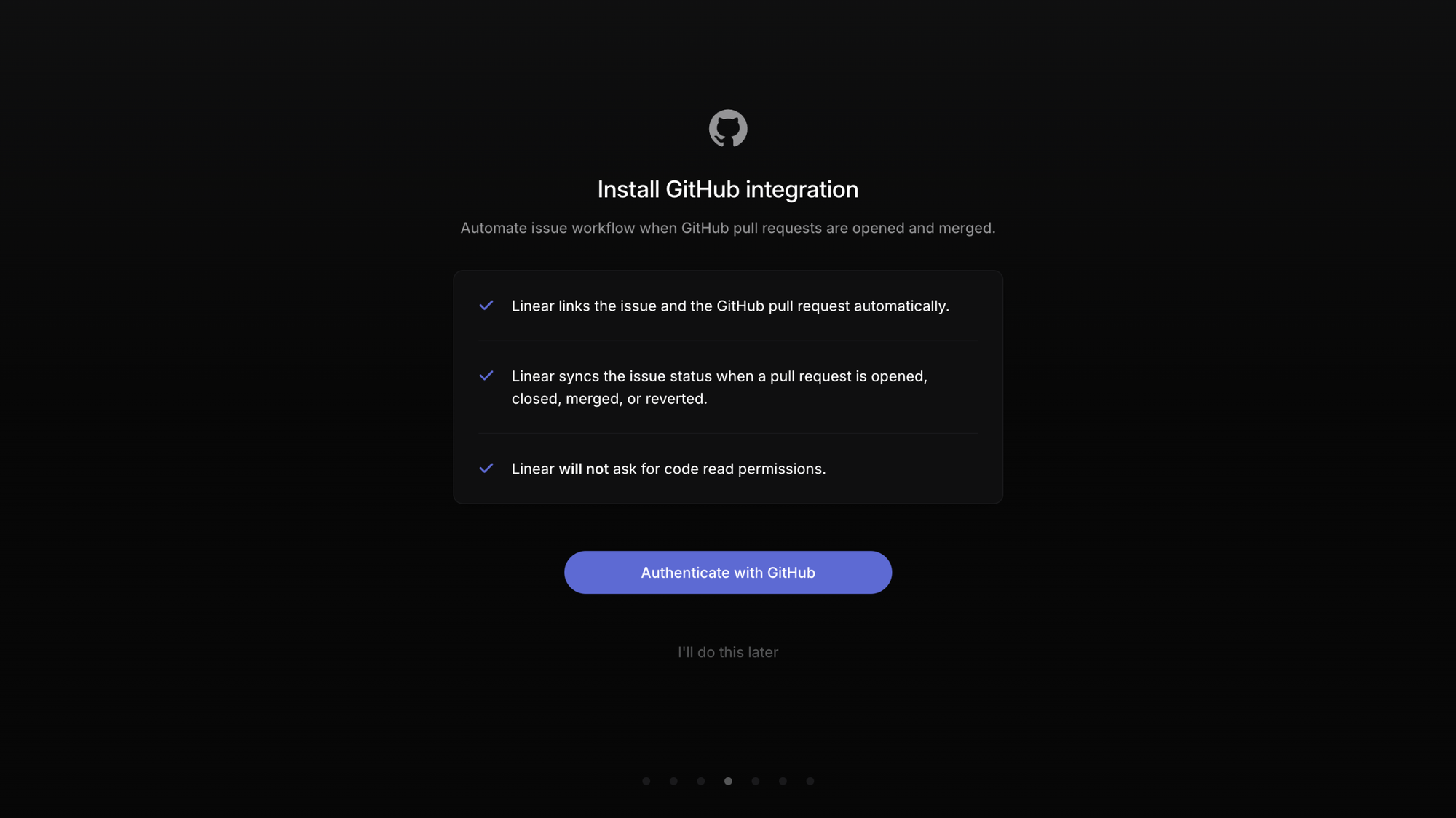
That's why Linear asks you to connect GitHub during onboarding. Not after, not buried in settings, but during the very early steps after signup.
Although it might be perceived as friction (and it's skippable anyway), Linear surfaces that step early on because they know what they're dealing with: engineering teams who already have a workflow and won't abandon it for a new tool, no matter how beautiful.
The framing matters too. It's not "here's a feature you can enable." It's "Linear belongs in the workflow you already have."
And then there's this line: "Linear will not ask for code read permissions." One sentence that removes the security objection that would otherwise live in the back of an engineering manager's mind. Linear doesn't hope you trust it, it engineers trust by telling you exactly why you can: they show they get you.
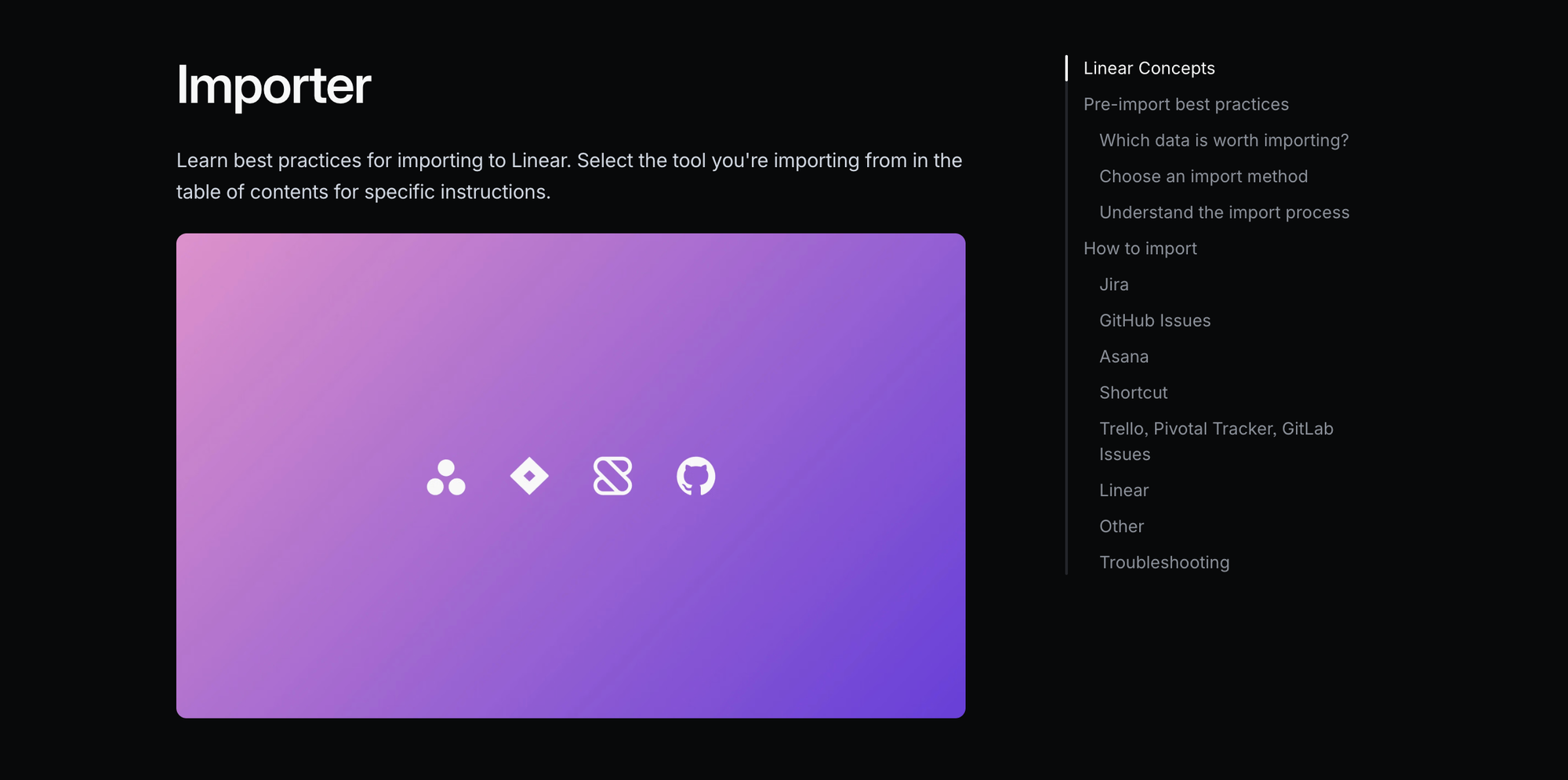
But they don't stop at GitHub. Linear has an entire Importer section with step-by-step guides to migrate from Jira, Asana, Shortcut, Trello, GitHub Issues and more.
The /switch page gives you the political support to sell Linear internally. The Importer makes it as easy as possible to actually switch.
Together they're saying: "we have thought about every single reason you might not make the switch, and we've built something for each one."
That's not just onboarding. It's also adoption obstacle removal.
So what?
Linear is a team tool, not a personal one. Which means a single user signing up is not a win but nothing more than a starting point.
Most SaaS products in that position outsource the adoption problem to Sales and CS. Linear decided the product itself should carry some of that weight, and makes supporting guidance available to anyone signing up, no matter their company size.
This is a great example of a hybrid GTM motion where the product also works as a sales/CSM.
The product is great and they know it. Because they care about building a great, valuable and superior product. Everything you see from their comms to their website to their product and user interface attests of that.
But they know their success depends on entire teams and companies adopting it.
The /switch page, the pilot guides, the GitHub integration, the Importer... none of these are accidental features. They're Linear's answer to a critical question: what happens after signup, when the real work of getting a whole team on board begins?
I hope this was valuable.
PS_
Want me to review your onboarding for $0? Apply here.
I'll share a miro board with screen-by-screen annotations and top recommendations I'd work on first, and why. I'll look at it through both a strategic, user psychology and UX lens, based on the same system I use with clients.
(No commitment, no following harassment with a drip email campaign or whatever)
Senior Product Designer • Activation/Onboarding Specialist
Helping B2B SaaS founders activate, convert and retain more users
Let's talk → LinkedIn | fsimitchiev.com